Alloy wheels can develop cracks, bends, and other damage from potholes, kerbs, and everyday driving on Dubai roads. When this occurs, car wheel repair can be an alternative to replacing the entire wheel, depending on the type and severity of the damage. Welding is one way to fix cracked alloy wheels, but it is not always suitable. Before deciding to weld, drivers should know how alloy wheel welding works, whether it is safe, how long the repair will last, and when replacing the wheel is the better option.
This guide explains the benefits and risks of welding alloy wheels, the factors that affect how long a repair will last, and what Dubai drivers should consider before putting a repaired wheel back on the road.
What Is Alloy Wheel Welding?
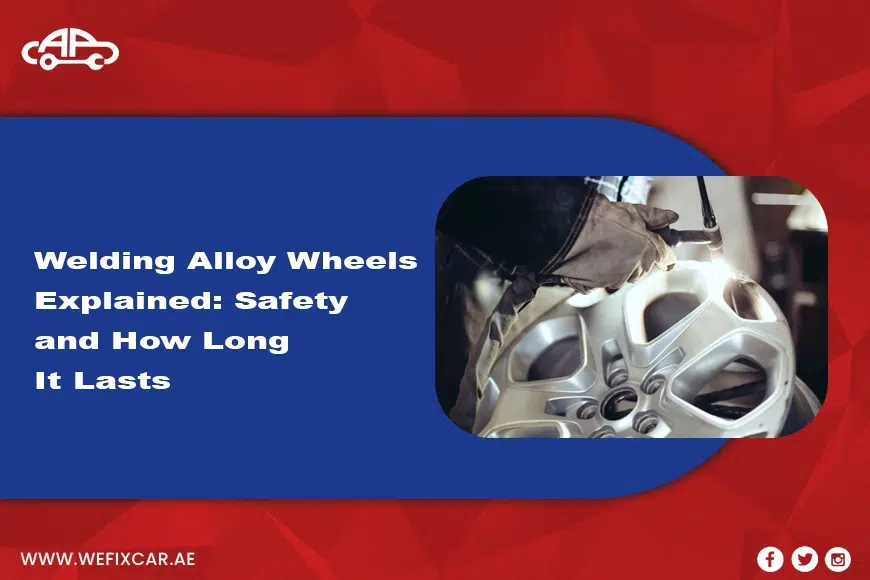
Alloy wheel welding is a repair method used to fill cracks or damaged spots in a wheel made from an aluminium alloy. A specialist heats the area. Adds matching filler material to join the broken metal then restores the spot as needed.
The goal is to fix the crack while keeping the wheel’s strength.. The outcome depends on the wheel material, where the damage is, the welding method and how skilled the technician is.
Not every damaged alloy wheel can be welded safely. A small crack in the spot may be repairable but severe structural damage can make the alloy wheel unsafe to use.
Welding is different from straightening. Straightening fixes. Deformations, while welding fixes cracks or breaks. A wheel might need than one repair but doing both does not guarantee that a badly damaged alloy wheel is safe.
Why Do Alloy Wheels Crack in Dubai?
Dubai’s driving conditions can expose alloy wheels to sources of damage. Even though alloy wheels are built to handle road use, sudden impacts and repeated stress can weaken them.
1. Potholes and road impacts
Hitting a pothole at speed can put a load on the wheel. Depending on the impact the alloy wheel may bend, develop a crack or take damage around the barrel.
The risk rises if the tyre has air pressure or if the impact is hard.
2. Kerbs and parking impacts
Touching a kerb can damage the alloy wheel’s edge. Some marks are only cosmetic. A hard hit can bend or crack the wheel and needs a professional check.
3. High temperatures
Dubai’s hot climate can raise tyre temperatures on long trips. Heat alone does not mean an alloy wheel needs repair but existing damage wrong tyre pressure and heavy loads can add worries.
Welding adds heat to the metal so a specialist must consider the alloy’s properties and the chance of distortion during the repair.
4. Previous repairs or hidden damage
A wheel that has already been welded or straightened may have hidden weaknesses. Extra damage can appear around a repair especially if the original work was poor or the wheel meets another hard hit.
That is why an inspection should look at the alloy wheel not just the visible crack.
Is Welding Alloy Wheels Safe?
The answer depends on the wheel manufacturer’s advice and the type of damage. Welding an alloy wheel should never be seen as a fix just because a shop can close a visible crack.
Some wheel manufacturers explicitly forbid welding or heat repairs. For example RONAL Wheels says you should replace cracked or deformed alloy wheels of welding or heating them.
Other specialist repair shops may evaluate some cracks for repair in certain rim areas.. A repair that is technically possible is not always approved by the manufacturer or suitable for every vehicle.
Before agreeing to welding consider these safety factors.
The location of the crack
A crack near a spoke, hub, wheel bolt hole or another load‑bearing spot can weaken the alloy wheel’s ability to hold the vehicle. These spots need caution and replacement is usually the safer choice.
Damage, to the barrel or outer rim lip may be looked at differently by some repair specialists. Nevertheless the manufacturer’s instructions must come first over a shop’s general repair policy.
Read More: EV Wheel Alignment & Balancing: Managing Battery Weight
The wheel’s construction
Cast aluminium wheels, forged wheels and flow‑formed wheels can have material properties and build characteristics. Heat can change the alloy metal’s properties and an unsuitable repair can bring stresses.
A specialist should identify the wheel type. Check the manufacturers guidance before recommending a repair. Expensive wheels fitted to performance vehicles deserve care because the design and operating loads may limit acceptable repair methods.
The technicians experience
Welding a wheel requires more than filling a crack with metal. The technician must understand the alloy prepare the damaged area appropriately control heat and assess whether the wheel remains suitable for service.
Even an experienced welder should not repair a wheel that the manufacturer has declared unsuitable for welding. Professional skill cannot eliminate every risk.
Inspection after the repair
A repaired wheel needs appropriate quality checks before it is returned to service, where the repair itself is permitted. Depending on the procedure these may include checking for defects in the area measuring wheel runout checking balance and testing for air leakage.
These checks help identify problems. They do not guarantee that every repaired wheel will remain safe indefinitely. If the wheel is unsuitable for welding testing does not make the prohibited repair acceptable.
How Long Does a Welded Alloy Wheel Last?
There is no fixed lifespan for a welded alloy wheel. A repaired wheels durability depends on factors and no workshop should promise that a weld will last a particular number of years without considering the actual damage and repair method.
If a repair is permitted by the wheel manufacturer and completed to the required standard the performance of the wheel will depend on the condition of the wheel and the stresses the wheel experiences. In cases replacement may be the only responsible option.
The following factors influence how long a repaired wheel may remain serviceable.
| Factor Effect on durability |
|——–|———————-|
| Crack location | Damage in a highly stressed area creates greater concerns. |
Original wheel condition | Previous repairs, corrosion or additional cracks can affect suitability. |
Repair quality | Poor preparation or an unsuitable welding procedure can increase the risk of failure. |
Driving conditions | Potholes, kerbs, heavy loads and repeated impacts place additional stress on the wheel. |
Tyre pressure | Incorrect pressure can affect how impact forces are transferred to the wheel. |
Follow‑up inspections | Checks can help identify new damage or air leakage before a problem worsens. |
Can a welded alloy wheel last for years?
It is possible for a permitted completed repair to remain serviceable for an extended period. However that possibility should not be confused with a guarantee.
A wheel may develop another crack after an impact. Damage may also progress if the original problem was not fully addressed. Even when a wheel appears normal visual appearance alone cannot confirm integrity.
For this reason the useful question is not simply how many years a weld might last. It is whether the wheel is suitable for repair in the place and whether the wheel can meet the manufacturers safety requirements afterwards.
Welding vs Replacing an Alloy Wheel
When a crack appears drivers often compare the cost of welding with the price of a replacement wheel. Cost matters,. The decision should begin with safety.
Cosmetic refurbishment
Suitable for scratches, scuffs and finish defects that do not affect structural integrity. The process may include sanding, polishing and repainting.
Wheel straightening
May be suitable for some bends if the wheel manufacturer permits the process and the wheel has no disqualifying structural damage.
Wheel replacement
Generally the choice when a wheel has a structural crack, prohibited damage, severe deformation or a history of unsuitable repairs.
The cheapest initial option is not always the economical over time. If a welded wheel fails the consequences may extend beyond the wheel itself to tyre damage, vehicle control and additional repair expenses.
A suitable replacement also restores the opportunity to use a wheel that meets the vehicles required specifications. Check the wheel size, offset, load rating, bolt pattern and compatibility before purchasing one.
What Should Dubai Drivers Do If an Alloy Wheel Cracks?
Dubai drivers should take wheel damage seriously especially when travelling on motorways or making journeys, between emirates. A small‑looking crack can affect tyre pressure and wheel strength.
Follow these steps if you suspect a cracked alloy wheel.
1. Stop safely. If you notice pressure loss, severe vibration or visible structural damage pull over somewhere safe. Avoid continuing your journey on a damaged wheel.
2. Check the tyre and wheel. Look for cracks, tyre bulges, cuts or signs of air leakage but do not rely on a visual inspection alone.
3. Arrange an inspection. A qualified workshop can remove the wheel and tyre so that the damaged area can be examined and the condition of the wheel can be assessed.
4. Ask about manufacturer guidance. Confirm whether welding or another repair is allowed for your wheel. If it is not allowed choose a replacement.
5. Check the work. When a repair is approved, ask which inspection and testing procedures have been completed before the wheel is refitted.
If you suspect a crack arranging roadside recovery is safer than driving to a garage. Do not attempt to weld the wheel yourself or hide the damage with filler or paint.
How Can You Prevent Alloy Wheel Damage?
Although not every impact can be avoided, a few practical habits can reduce the risk of wheel damage.
– Maintain tyre pressure. Check the pressure regularly. Follow the vehicle manufacturers recommendations, including any guidance for different loading conditions.
– Slow down over damaged road surfaces. Reduce speed safely when approaching potholes, uneven surfaces or road hazards.
– Park. Avoid striking kerbs while parking or turning into spaces.
– Inspect wheels after a strong impact. Look for cracks, bends, pressure loss or steering vibration. Arrange an inspection if anything seems unusual.
– Use compatible wheels and tyres. Incorrect specifications can affect fitment and vehicle handling.
– Address warning signs promptly. Repeated pressure loss, unusual vibration or uneven tyre wear should be investigated than ignored.
These measures can help protect your wheels. They cannot make a damaged wheel safe. Professional assessment remains essential when structural damage is suspected.
Choosing a Car Wheel Repair Specialist in Dubai
When comparing workshops look beyond price and turnaround time. A reliable provider should explain the damage clearly. Recommend replacement when a wheel cannot be repaired safely.
Ask the following questions before approving the work:
– Will the repair comply with the wheel manufacturers instructions?
– Is the wheels material and construction for the proposed procedure?
– What checks will be carried out after the repair?
– Will the tyre, valve and tyre‑pressure monitoring system be inspected where necessary?
– Is there a written warranty and what does it cover?
– Would replacement offer a safer or more cost‑effective solution?
A trustworthy specialist should be willing to explain the limitations of the repair than guarantee a result before inspecting the wheel.
For Dubai motorists professional car wheel repair should prioritise road safety, correct fitment and the wheels long‑term condition. Cosmetic improvements are valuable. They should never take precedence over structural integrity.
Final Thoughts
Welding alloy wheels can be a demanding process and its suitability depends on the manufacturers guidance, wheel construction and the location and extent of the damage. Some specialist workshops offer welding for selected cracks. Other manufacturers prohibit welding entirely and require replacement.
There is no guaranteed lifespan for a welded wheel. Its continued serviceability depends on whether the repair was appropriate how the wheel was inspected and the conditions the wheel encounters afterwards.
If your alloy wheel is cracked, do not decide based on price or appearance. Have it assessed by a specialist confirm the manufacturers recommendations and choose replacement whenever repair is prohibited or the wheels safety cannot be established.
Frequently Asked Questions
1. Can cracked alloy wheels be welded?
Some specialist workshops offer welding for selected cracks. It is not suitable for every wheel. Certain manufacturers prohibit welding on safety‑critical components. Check the manufacturers guidance. Have the wheel professionally assessed before making a decision.
2. How long does a welded alloy wheel last?
There is no fixed lifespan. Durability depends on the wheels condition the location of the crack the permitted repair method and subsequent driving conditions. No repair should be treated as a guarantee against damage.
3. Is it safe to drive with a cracked alloy wheel?
Driving with a cracked wheel can be dangerous because the crack may worsen, cause air leakage or lead to wheel failure. Stop in a place and arrange professional inspection or roadside recovery rather than continue to drive.
4. Is welding an alloy wheel cheaper, than replacing it?
Welding may cost initially where a repair is permitted but cost should not determine whether a structurally damaged wheel is reused. Compare the repair cost with a compatible replacement and prioritise safety.
5. Can all alloy wheel cracks be repaired?
No. Cracks around spokes the hub, mounting holes or other critical areas may make an alloy wheel for repair. Some manufacturers prohibit welding. Replacement is the option when damage falls outside approved repair limits.
6. Does Dubais hot weather affect welded alloy wheels?
High temperatures can raise tyre operating temperatures during long journeys. However heat alone does not decide whether a repair will last. The alloy wheels condition, tyre pressure, repair suitability and driving conditions are important factors.
7. How can I tell if the alloy wheel is cracked?
Visible lines in the metal repeated tyre pressure loss, vibration or damage after hitting a pothole can show a problem. Some cracks are hard to see without removing the tyre so a professional inspection may be needed.
8. Should I replace the alloy wheel after hitting a pothole?
Not necessarily. A pothole impact may cause damage, a bend or a structural crack. Have the alloy wheel and tyre inspected, especially if vibration or pressure loss occurs. Replace the alloy wheel if the damage makes it unsafe or unsuitable, for repair.