

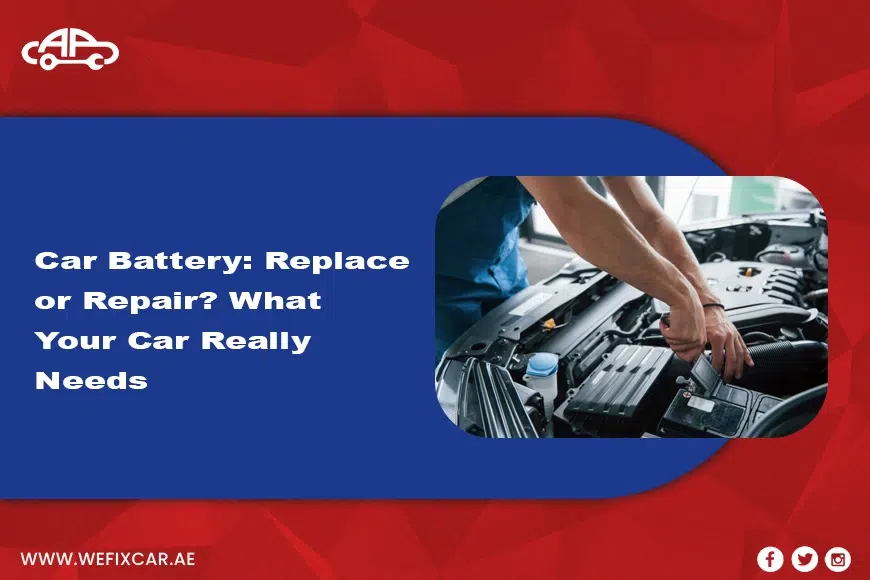
A car battery is one of the most important components of your vehicle because it provides the electrical power needed to start the engine and operate essential systems. When your battery begins to weaken, you may notice slow engine cranking, dim headlights, dashboard warning lights, or difficulty starting your car. But does a weak battery always need replacement, or can it be repaired?
Understanding the difference between a repairable battery problem and a battery that has reached the end of its life can help you save money, avoid unexpected breakdowns, and keep your vehicle running reliably. In this guide, we will explain the common causes of battery problems, when repair may be possible, and when replacement is the better choice.
Why Is Your Car Battery Important?
Your car battery supplies the initial electrical energy required to start the engine. Once the engine is running, the alternator generally supplies electricity to the vehicle’s systems and recharges the battery.
Modern vehicles rely on batteries for much more than engine starting. They also support electronic control units, security systems, infotainment systems, lighting, and various onboard features.
A healthy battery helps ensure that these systems operate properly. However, heat, frequent short journeys, electrical faults, and normal wear can gradually reduce battery performance. If you ignore early warning signs, you may eventually find yourself unable to start your vehicle.
Common Signs Your Car Battery Needs Attention
Recognising battery problems early can help you determine whether professional testing, a repair, or a replacement is necessary.
1. Slow Engine Cranking
If your engine turns over more slowly than usual when you start the car, the battery may not be delivering enough current. This can happen because of a weak battery, corroded terminals, poor electrical connections, or a faulty starter motor.
2. Clicking Sounds When Starting
A clicking noise when you turn the key or press the start button can indicate insufficient battery power. However, a faulty starter or loose battery connection can produce similar symptoms.
3. Dim Headlights and Electrical Issues
If your headlights appear unusually dim or your electrical accessories behave inconsistently, your battery or charging system may need inspection.
4. Battery Warning Light
A battery-shaped warning light on the dashboard often indicates a problem with the charging system. It does not necessarily mean the battery itself has failed. The alternator, wiring, or drive belt may be responsible.
5. Corrosion Around Battery Terminals
White, blue, or greenish deposits around the battery terminals can interfere with electrical connections. In some cases, cleaning the terminals and securing the connections can resolve the problem without replacing the battery.
6. Repeated Starting Problems
If your vehicle repeatedly requires a jump-start, the battery may be deteriorating. Alternatively, the alternator may not be charging it correctly, or an electrical component may be draining power while the vehicle is parked.
When Can a Car Battery Be Repaired?
In many cases, the problem can be resolved without installing a new battery. However, battery repair usually means correcting an external issue or restoring the battery’s charge rather than rebuilding its internal components.
Cleaning Corroded Battery Terminals
Corrosion can prevent electricity from flowing efficiently between the battery and the vehicle. Professional terminal cleaning and connection checks may restore normal performance if the battery itself remains healthy.
Recharging a Discharged Battery
If you accidentally leave your headlights on or your vehicle remains unused for an extended period, the battery may lose its charge. An appropriate recharge followed by a battery-health test may restore reliable operation.
Fixing Loose or Damaged Connections
Loose clamps, damaged cables, and poor grounding can cause starting problems. Repairing these components may solve the issue without requiring a new battery.
Diagnosing Charging System Problems
A faulty alternator or an electrical drain can repeatedly discharge a battery. A mechanic should inspect the charging system and identify the underlying cause before recommending replacement.
These repairs are most useful when testing confirms that the battery can still perform reliably.

VehicleRuns
+1
When Should You Replace Your Car Battery?
Sometimes replacement is the safest and most practical solution. Consider replacing your battery when a professional inspection confirms one or more of the following conditions.

1. The Battery Case Is Swollen, Cracked, or Leaking
Physical damage can expose you to corrosive battery chemicals and create safety risks. Do not attempt to charge or repair a visibly damaged battery; arrange professional replacement.

2. The Battery Fails a Health Test
If a properly charged battery repeatedly fails an appropriate load or conductance test, replacement is generally the dependable choice.

3. The Battery Cannot Hold Its Charge
If the battery repeatedly loses charge despite a functioning charging system and no abnormal electrical drain, internal deterioration may be responsible.

4. You Frequently Need Jump-Starts
Repeated jump-starts suggest an unresolved problem. If testing confirms that the battery is no longer reliable, replacing it can help prevent further starting failures.
The average conventional car battery often lasts around three to five years, although climate, driving habits, battery type, and maintenance can affect its lifespan. Age alone does not prove that replacement is necessary.
GMC
+1
Car Battery Repair vs. Replacement: Which Is Better?
The right decision depends on the battery’s actual condition, not simply on how difficult it is to start the car.
| Situation | Recommended solution |
|---|---|
| Dirty or corroded terminals | Clean and inspect connections |
| Battery discharged after lights were left on | Recharge and test |
| Loose or damaged battery cables | Repair or replace cables |
| Alternator not charging properly | Diagnose and repair charging system |
| Battery fails a proper health test | Replace the battery |
| Battery case is cracked or leaking | Professional replacement |
| Battery repeatedly drains while parked | Diagnose electrical drain and test battery |
The key takeaway: Repair the cause when the battery is still healthy. Replace the battery when testing confirms that it can no longer operate reliably.
How to Choose the Right Replacement Battery
If replacement is necessary, selecting the correct battery is just as important as choosing the right time to replace it.
Check Your Vehicle’s Specifications
Consult your owner’s manual or a qualified technician to confirm the recommended battery size, terminal arrangement, capacity, and starting-current rating. A battery that physically fits may not meet your vehicle’s electrical requirements.
Choose the Correct Battery Type
Vehicles may require conventional flooded, EFB, or AGM batteries. Cars equipped with start-stop systems or advanced battery management may need a specific battery technology.
Consider Dubai’s Hot Climate
High temperatures can accelerate battery deterioration. If you drive in Dubai, regular battery testing and inspection can help identify declining performance before the battery fails unexpectedly.
Ask About Warranty and Installation
Before purchasing a replacement, check the warranty period, installation charges, and whether your vehicle requires battery registration or electronic-system resets.
A suitable battery installed correctly can provide dependable starting performance and help avoid problems caused by incorrect fitment.
GMC
+1
How to Extend Your Car Battery’s Life
Although batteries naturally wear out over time, good maintenance can help reduce unnecessary strain.
- Schedule periodic battery and charging-system tests.
- Keep the battery terminals clean and connections secure.
- Avoid leaving lights or electrical accessories running when the engine is off.
- Take your vehicle on suitable drives rather than relying exclusively on frequent, very short trips.
- Investigate repeated battery discharge instead of repeatedly jump-starting the car.
- Have an older battery inspected before long journeys.
Always follow your vehicle manufacturer’s maintenance instructions. Never disconnect battery cables while the engine is running, and do not charge a damaged battery.
GMC
+1
Why Professional Battery Testing Matters
A car that refuses to start does not always have a faulty battery. The starter motor, alternator, electrical connections, and other components can produce similar symptoms.
Professional testing helps distinguish between a discharged battery and one that needs replacement. It can also identify charging problems that might cause a new battery to fail prematurely.
If you are unsure about your battery’s condition, arrange an inspection before purchasing a replacement. This approach can help you avoid unnecessary expenses and ensure the underlying problem is addressed.
Conclusion
Deciding whether to repair or replace a car battery starts with understanding the cause of the problem. Corroded terminals, loose connections, and temporary loss of charge may be resolved without replacing the battery. However, physical damage, repeated failure of battery-health tests, and an inability to hold charge are strong reasons to consider replacement.
Regular inspections, correct battery selection, and timely diagnosis can help keep your vehicle dependable. Rather than guessing, have the battery and charging system checked so you can make an informed decision based on your car’s actual needs.
Frequently Asked Questions
1. Can a dead car battery be repaired?
Sometimes. If the battery is simply discharged and remains healthy, recharging may restore its operation. A battery with internal damage or confirmed failure generally needs replacement.
2. How do I know whether my car battery needs replacing?
Common warning signs include slow engine cranking, repeated jump-starts, and difficulty holding a charge. A professional battery-health test is the best way to confirm whether replacement is necessary.
3. How long does a car battery usually last?
Many conventional car batteries last approximately three to five years. Temperature, driving patterns, and maintenance can make the actual lifespan shorter or longer.
4. Can cleaning battery terminals fix starting problems?
Yes, if corrosion or poor contact is the cause and the battery itself is healthy. If the problem continues, the battery, starter, and charging system should be tested.
5. Should I replace my battery if the battery warning light appears?
Not automatically. The warning may indicate a charging-system fault, such as an alternator problem. Have the system diagnosed before deciding which component needs repair.