

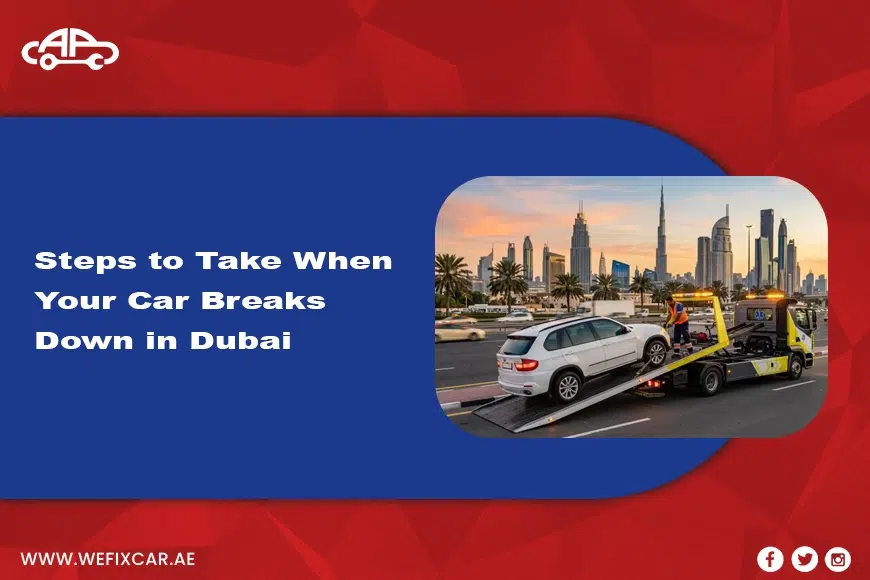
A car breakdown can happen at an inconvenient time, whether you are commuting to work, heading home, or driving on a busy Dubai highway. Knowing what to do in advance can help you stay calm and protect yourself, your passengers, and other road users. One of the practical solutions is roadside assistance, which can help with situations such as flat tyres, dead batteries, overheating, fuel problems, and vehicle towing. Having a plan is especially important in Dubai, where traffic, long-distance routes, and high temperatures can make a breakdown more stressful.
Stay Calm and Assess the Situation
The thing to do when your vehicle stops working is remain calm. Panic can lead to rushed decisions, especially when you are on a road. Turn on your hazard warning lights immediately to alert drivers that your vehicle has a problem.
Try to understand what caused the breakdown. Look at the dashboard for warning lights or messages. Listen for unusual sounds. If the engine has stopped because of overheating, avoid opening the bonnet because extremely hot components can cause burns.
If your car is still capable of moving carefully steer it toward a location. A hard shoulder, designated emergency area, parking area or another safe position away from moving traffic is preferable.
Move Your Vehicle to a Safe Location
Your location makes a difference during a breakdown. If the car can still be driven safely move it away from traffic lanes. Avoid stopping in the middle of a road unless there is absolutely no alternative.
Dubai has road networks, including major highways where vehicles travel at high speeds. Remaining inside a traffic lane can create a serious collision risk. Once you have stopped somewhere safer keep your hazard lights switched on.
If the vehicle cannot move, do not take risks trying to push it yourself, particularly on a highway or in heavy traffic. Instead, contact an assistance or emergency service.
The UAE government lists 999 for police, 998 for ambulances, and 997 for civil defense in emergencies.
Switch On Your Hazard Lights
Hazard lights are a safety feature during a vehicle breakdown. They make your car more visible to approaching motorists and indicate that your vehicle is experiencing a problem.
Keep the hazard lights operating while you wait for assistance, provided the vehicle’s electrical system allows it. At night or in poor visibility, visibility becomes even more important.
If you have warning equipment and it can be placed safely without exposing yourself to traffic you may use it according to appropriate road-safety practices. However, never walk into a traffic lane simply to place a warning device.
Contact Roadside Assistance
Once you and your passengers are in a safe position, contact a reliable breakdown service. Roadside assistance can be particularly useful when you need help instead of attempting a repair yourself.
Depending on the provider and your coverage, assistance may include battery jump-starts, tyre changes, fuel delivery, minor roadside repairs, lockout assistance, and vehicle towing.
When contacting a service, provide information about your location. Dubai has roads, interchanges, service roads and landmarks, so simply saying that you are “somewhere on Sheikh Zayed Road” may not be enough.
Provide the road name, direction of travel, nearest exit, landmark, parking area or location shared through your phone. If you can safely share your location, this may make it easier for the service provider to find you.
Read More: When Should You Call Roadside Assistance in Dubai. 10 Situations Every Driver Should Know
Tell the Technician What Happened
When requesting assistance explain what happened before the vehicle stopped.
For example, tell the technician if:
The engine suddenly stopped.
The battery appears to be dead.
You have a flat tyre
The temperature warning appeared.
You ran out of fuel.
The vehicle will not start.
You noticed smoke or unusual smells
The car was involved in a minor accident.
Giving accurate information can help the technician bring appropriate equipment and determine whether the vehicle can be repaired at the location or needs towing.
Do Not Attempt Dangerous Repairs
Some simple vehicle problems can be handled with the right equipment and knowledge, but a roadside breakdown is not the time to experiment with unfamiliar repairs.
Avoid working underneath a vehicle that is parked in an unsafe location. Do not attempt electrical repairs, open a hot cooling system, or continue driving if the engine is overheating.
Similarly, if you smell fuel, see smoke, or notice signs of fire, move away from the vehicle if it is safe to do and contact emergency services.
Professional assistance is usually the safest choice when the problem is unclear.
Be Careful During Dubai’s Hot Weather
Dubai’s climate can make vehicle breakdowns particularly challenging, especially during the summer. A disabled car can become uncomfortable quickly, particularly when passengers are inside.
Keep drinking water in your vehicle and avoid unnecessary physical activity while waiting for help. If your vehicle has stopped in a location, prioritize getting yourself and your passengers to a safer position rather than trying to repair the car.
Never leave children or vulnerable passengers unattended inside a vehicle.
Regular maintenance can also reduce the likelihood of heat-related breakdowns. Check your coolant system, battery, tyres, engine oil, and air-conditioning system.
Check Your Tyres Regularly
Tyre problems are among the reasons drivers require roadside help. Before starting a journey around Dubai, check tyre pressure and inspect the tyres for visible damage or excessive wear.
Also, make sure you know whether your vehicle has a spare tyre, a tyre repair kit, or another emergency solution.
Driving on damaged or underinflated tyres can increase the risk of a breakdown and may compromise vehicle control. Regular inspections are particularly useful before highway journeys.
Keep Your Car Battery in Good Condition
A weak battery can leave you stranded without warning. If you notice slow engine cranking, dim lights, or repeated starting problems, have the battery inspected.
Dubai’s hot climate can place stress on vehicle components, making regular battery checks worthwhile.
If the battery fails completely, professional assistance can often provide a jump-start and determine whether the battery needs replacement.
Know When Towing Is Necessary
Not every breakdown can be fixed beside the road. If the vehicle has suffered mechanical damage, transmission problems, serious overheating accident damage, or another significant fault, towing may be the safest option.
Do not continue driving simply because the engine starts again. A temporary restart does not necessarily mean the vehicle is safe to drive.
A qualified technician can assess the condition of the vehicle and determine whether it should be repaired immediately or transported to a garage.
Dubai’s transport authorities have procedures for managing traffic incidents and disabled vehicles on major roads.
Keep an Emergency Kit in Your Vehicle
Preparation can make a breakdown much easier to handle. Consider keeping an emergency kit in your car containing items such as drinking water, a first-aid kit, a flashlight, basic tools, a phone charger or power bank, reflective equipment, and vehicle documents.
You should also keep contact numbers saved on your phone. Having your insurance provider, vehicle recovery company, and other relevant services available can save valuable time during an emergency.
It is also useful to know your vehicle’s registration details and understand what your insurance or assistance policy covers.
Check Your Insurance and Assistance Coverage
Before you actually need help check whether your car insurance policy includes assistance or towing. Some policies may offer roadside services as part of the coverage, while others may require a package.
Understand the limits of your coverage, including towing distance, the number of service calls, geographical restrictions, and the types of breakdowns covered.
Knowing these details beforehand can prevent surprises when you are stranded.
What Not to Do During a Breakdown
One of the mistakes drivers make is continuing to drive when a serious warning sign appears. If your vehicle is overheating, producing smoke, losing power or behaving unpredictably, continuing to drive could turn a problem into major mechanical damage.
You should also avoid standing behind or in front of a disabled vehicle when traffic is moving nearby. Stay aware of surrounding vehicles and prioritize a position.
Do not accept help from unknown individuals if you are uncomfortable with the situation. Instead, use a trusted service provider or your insurance assistance service.
How to Prevent Future Breakdowns
The breakdown strategy is prevention. Follow your vehicle manufacturers’ recommended maintenance schedule. Address small problems before they become major failures.
Have your engine oil, coolant, battery, brakes, tyres, belts, hoses and other important components inspected regularly. Pay attention to warning lights and unusual noises, of ignoring them.
Before driving, check fuel levels, tyre pressure and basic vehicle fluids. Keeping your car maintained can significantly reduce the possibility of being stranded.
Dubai drivers should also prepare for driving conditions from heavy urban traffic to long highway journeys. A little preparation can make a difference.
Final Thoughts
A car breakdown in Dubai can be stressful. Knowing what to do can help you manage the situation safely and efficiently. Start by turning on your hazard lights, moving to a safe location whenever possible, and avoiding dangerous roadside repairs. Then contact a roadside assistance provider and give them accurate information about your location and vehicle problem.
Regular maintenance is equally important. Checking your tyres, battery, cooling system, fluids and other essential components can reduce the risk of breakdowns. Most importantly, always prioritize personal safety over trying to save time or money on a repair.
With preparation, emergency contacts, and access to reliable assistance, drivers can handle unexpected vehicle problems with greater confidence.
Frequently Asked Questions
What should I do first if my car breaks down in Dubai?
Turn on your hazard lights and, if possible, move the vehicle to a safe location away from traffic. Avoid traffic lanes and contact an appropriate assistance service.
When should I call roadside assistance?
You can call for assistance when your vehicle cannot safely continue because of issues such as a flat tyre, dead battery, mechanical failure, overheating, fuel problems, or other unexpected breakdowns.
What emergency number should I call in Dubai?
For emergencies, the UAE government lists 999 for police, 998 for ambulance and 997 for civil defense.
Can I repair my car myself after it breaks down?
Only attempt a repair if you fully understand the problem and can do it safely. Avoid repairs near moving traffic or with pressurized or electrically dangerous components.
Why is regular car maintenance important in Dubai?
Regular maintenance helps identify problems with tyres, batteries, cooling systems, fluids, brakes, and other components before they cause a breakdown.
Does car insurance include roadside assistance?
It depends on your insurance policy. Check your coverage to determine whether towing, battery assistance, tyre services, fuel delivery or other breakdown services are included.
Should I continue driving if my car overheats?
Generally, you should stop in a safe location and seek professional assistance rather than continuing to drive an overheating vehicle. Continuing to drive can cause engine damage.
What should I keep in my car for emergencies?
Useful items include drinking water, a first-aid kit, a flashlight, a phone charger or power bank, basic emergency equipment and relevant vehicle and insurance information.