You’re driving along, radio on, thinking about dinner, when a little light pops up on your dashboard. Or maybe your odometer quietly ticks past 60,000 miles. Or your mechanic casually says, Next time, you’ll be due for the big one. However it arrives, the moment you realize your car needs a major service can stir up a special kind of anxiety. It’s not just the cost — though that’s certainly part of it. It’s the mystery. What does “major” even mean? Are they just going to change the oil and charge me triple? Is this a real need or a manufactured one?
Let’s pull over for a minute and talk this through. I’m not a mechanic in a branded shirt, and this isn’t a sales pitch. Think of this as a chat with a friend who’s been through it a few times. A major car service is, in plain terms, your vehicle’s most comprehensive scheduled health check. If regular maintenance is like taking vitamins and going for a yearly physical, the major service is the full-body MRI, the stress test, and the deep-tissue work all rolled into one long appointment. It’s proactive, it’s preventative, and yes — it’s necessary if you plan on keeping your car running safely, efficiently, and reliably for years to come.
Skipping it is the automotive equivalent of ignoring a toothache until your jaw is swollen. You might save a few hundred dollars today, but the eventual root canal — or in car terms, a seized engine, failed transmission, or catastrophic brake failure — will cost you exponentially more in money, stress, and danger.
This guide is here to demystify the entire process. We’ll walk through what actually happens on the lift, what each item means for your daily drive, and how to talk to your mechanic with confidence. Consider this your roadmap, so the next time that service is due, you feel prepared, not pressured.
Why Major is More Than Just a Marketing Word
First, let’s distinguish between service levels. Your car’s manual doesn’t just say “get service.” It outlines a meticulous schedule, usually alternating between minor (interim) and major (full) services at specific mileage or time intervals.
A minor service is the essential refresh. It typically includes an oil and filter change, a top-off of essential fluids, a tire rotation, and a basic visual inspection. It’s designed to keep everything running smoothly between bigger checkpoints.
The major service, however, is the full reset. It includes everything in the minor service, then goes much deeper. It’s based on the predictable lifespan of dozens of components that wear out gradually through heat, friction, and time. This isn’t about fixing something that’s broken; it’s about replacing what’s nearing the end of its life before it breaks at the worst possible moment — like on a highway, in the rain, with your family in the car.
The core philosophy is preventative maintenance. You’re not paying for repairs; you’re investing in peace of mind and longevity. This single appointment addresses the wear and tear on systems that are critical to your safety (brakes, steering), your wallet (fuel efficiency, engine longevity), and your peace of mind (preventing breakdowns).
The Major Service Checklist: Decoded for Real Life
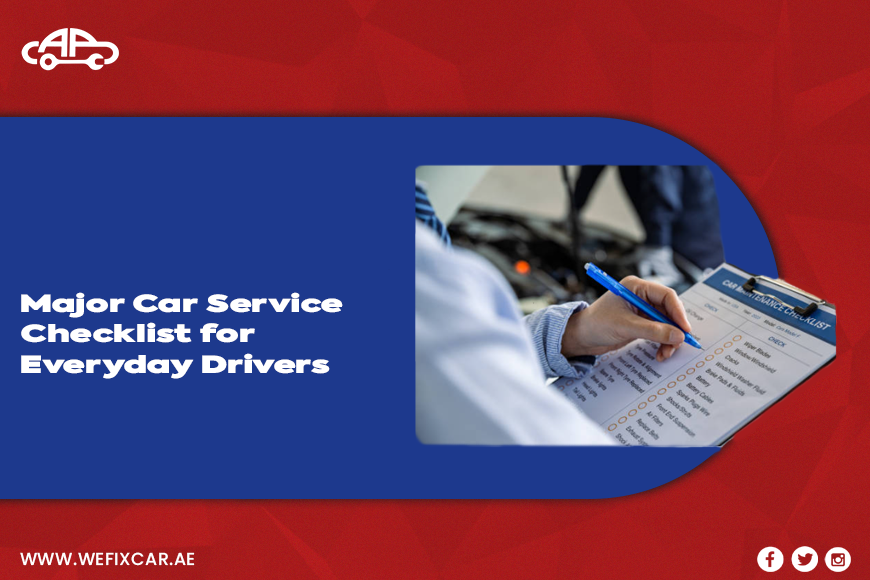
Here’s the heart of it — a breakdown of each common major service item, explained not in garage jargon, but in terms of what it does for you.
1. The Fluid Revolution: Changing Your Car’s Lifeblood
Fluids degrade. They break down from heat, absorb moisture, and get contaminated. New fluid is like a transfusion.
- Engine Oil & Filter: The constant. Removes microscopic metal wear particles and acidic byproducts of combustion.
- Engine Coolant: Over time, coolant loses its anti-corrosive and anti-freeze properties. Old coolant can literally eat away at your radiator, water pump, and heater core from the inside. Flushing it out prevents a future overheating disaster.
- Brake Fluid: This is hygroscopic, meaning it absorbs water from the air through tiny pores in the brake lines. Water in the brake fluid lowers its boiling point. Under hard braking, the fluid can boil, creating gas bubbles that make your pedal go spongy and drastically reduce stopping power. Flushing it out restores a firm, reliable pedal.
- Transmission Fluid: This hard-working fluid lubricates thousands of moving parts under extreme heat and pressure. As it breaks down, it gets gritty, leading to harsh shifts, slipping gears, and eventually, a multi-thousand-dollar replacement. A drain-and-fill (or flush) is cheap insurance.
- Power Steering Fluid: Often overlooked, but old fluid can make steering feel heavier and damage the power steering pump.
2. Filters: The Unsung Heroes of Performance and Health
Filters are your car’s first line of defense.
- Engine Air Filter: A clogged filter starves your engine of air, making it work harder, burn more fuel, and lose power. It’s a $30 part that can cost you hundreds in wasted gas.
- Cabin Air Filter: This is for you. Located behind your glovebox, it filters the air coming into your cabin. A dirty one means you’re breathing more dust, pollen, and pollutants. Changing it improves air quality, reduces allergies, and helps your A/C system work efficiently.
Read More: Best Car Recovery Service & Fast Towing Support in Dubai
3. Ignition & Fuel: The Spark in the Spark Plug
This is all about efficient combustion — turning fuel into motion cleanly and powerfully.
- Spark Plugs: These create the tiny lightning bolt that ignites the fuel-air mix in each cylinder. Worn plugs misfire, causing rough idling, poor acceleration, and terrible gas mileage. New plugs restore smoothness and efficiency.
- Fuel Filter: If your car has a serviceable one, it traps rust and grit from the fuel tank. A clogged filter restricts fuel flow, causing stuttering under acceleration and potentially damaging expensive fuel injectors.
4. The Big-Ticket, Save-Your-Engine Items
These are the headline acts of the major service. They cost more in parts and labor, but failing to address them risks total engine failure.
- Timing Belt/Chain: This is the single most critical item. The timing belt (or chain) synchronizes the rotation of the crankshaft and camshaft, ensuring the engine’s valves open and close at the exact right millisecond. If a timing belt (common in many 4-cylinder engines) snaps, the pistons can smash into the valves, bending them and essentially destroying the engine from the inside. This is a “replace on schedule, no exceptions” item. Chains are more durable but still wear and may need guides or tensioners replaced.
- Serpentine/Drive Belt: This single, snaking belt powers your alternator, power steering pump, water pump, and sometimes the A/C compressor. A cracked, glazed, or snapped belt leaves you stranded, often with an overheating engine. It’s a simple, preventative replacement.
- Water Pump: Often driven by the timing belt, it’s standard practice to replace the water pump during a timing belt job. You’re already paying for the labor to access it, and a new pump prevents a future leak or failure that would require taking everything apart again.
5. Brakes & Suspension: The Safety & Comfort System
This isn’t just an inspection; it’s a thorough evaluation of everything that keeps you in control and comfortable.
- Brake Pads & Rotors: Measured for thickness. Worn pads and warped or thin rotors are replaced. This is non-negotiable for safety.
- Brake Fluid Flush: As mentioned above, this is part of the fluid service and is crucial for brake system health.
- Shocks & Struts: These control the up-and-down motion of your car. Worn shocks don’t just make for a bouncy ride; they increase stopping distance, cause uneven tire wear, and reduce control during evasive maneuvers.
- Steering & Suspension Components: Ball joints, tie rod ends, and control arm bushings are checked for play and wear. Loose components here lead to vague steering, alignment issues, and dangerous handling.
6. The Comprehensive Once-Over
While the car is in the air and the mechanic is in the groove, they perform a full visual and operational inspection:
- Battery & Charging System Test: Checks if your battery can hold a charge and if the alternator is producing enough power.
- Light Check: All exterior and interior lights.
- Tire Inspection & Pressure: Tread depth, uneven wear patterns (which indicate alignment issues), and correct PSI.
- Exhaust Inspection: For rust, leaks, or damage.
- Underbody Check: For corrosion, fluid leaks, or damage from road debris.
- HVAC System Test: Heater and air conditioner performance.
Navigating the Real World: Cost, Communication, and Trust
Let’s talk money. A major service is a significant investment, often ranging from $500 to $1,500 or more, heavily influenced by your vehicle and whether it needs a timing belt. The way to frame it is this: compare it to the cost of a single major repair, or worse, a new car payment. It’s the most cost-effective way to extend your car’s life.
Finding the right mechanic is everything. Dealerships have brand-specific expertise but are often the most expensive. Independent shops with certified technicians (look for ASE certifications) can offer comparable quality at a better rate. Read reviews, ask friends, and build a relationship.
When you get the estimate:
- Ask for a breakdown of parts and labor for each item.
- Use the language from this guide. Say, “I understand the timing belt is due. Can you explain the consequences if it fails on my specific engine?”
- Ask to see the old parts when they’re replaced, especially the big ones. A trustworthy shop will have no problem with this.
- Clarify what’s included. Is this a fixed-price package, or will you be called for approval if they find unexpected issues (like a torn CV boot or a leaking shock)?
The Final Word: It’s an Investment, Not an Expense
Viewing a major car service as a burdensome expense is a short-term mindset. Reframe it as one of the smartest investments you can make in your vehicle. It’s the process that transforms a depreciating asset into a reliable, safe, and long-lasting tool for your life.
It preserves your safety, your schedule (no breakdowns), your fuel budget, and ultimately, your car’s resale value. A vehicle with a documented, consistent service history is worth significantly more when it’s time to sell or trade in.
So, when that mileage marker arrives, or that light comes on, don’t dread it. Open your owner’s manual, reference this guide, and schedule the appointment with confidence. You’re not just getting a service; you’re buying more miles, more memories, and more peace of mind on the road ahead. That’s a major win.
FAQs: Straight Answers to Common Concerns
Q: My car is running perfectly. Why should I mess with it?
A: This is the most common misconception. Many critical failures give zero warning. The timing belt doesn’t squeak before it snaps. Transmission fluid doesn’t shift poorly until the damage is severe. This service is about preventing the silent failures.
Q: Can I do any of this myself to save money?
A: If you’re handy, items like air filters, cabin filters, and even spark plugs (on accessible engines) are great DIY projects. However, fluid flushes, brake work, and especially timing belt replacement require specialized tools, knowledge, and disposal methods. A mistake can be catastrophic. Know your limits.
Q: How do I know if my mechanic is honest?
A: Transparency is key. They should explain the “why” behind each recommendation, show you wear on old parts if asked, and provide clear estimates. Avoid shops that use fear tactics or are vague. Building a long-term relationship is the best defense.
Q: What if they find something wrong that’s not on the service list?
A: They should call you, explain the issue, show you the evidence (e.g., a leaking seal), and provide a written estimate for the additional repair. You have the right to approve or decline any work beyond the original quoted service.
Q: Is it okay to use aftermarket parts instead of dealer parts?
A: High-quality aftermarket parts from reputable brands (e.g., Bosch, NGK, ACDelco) are often identical or better than dealer parts and cost less. Ask your mechanic what brand they use. For critical items like timing belts, insist on a quality brand, not the absolute cheapest option.
Q: How long will my car be in the shop?
A: For a full major service, plan on a full business day (drop off in the morning, pick up late afternoon). If a timing belt is involved, it may require an overnight stay. Always ask when booking.
Q: Does this service include a car wash?
A: Sometimes, but don’t count on it! It’s always nice to ask, but the focus is on mechanical work, not detailing.