

Typing tyre balancing near me into your phone usually means one thing. Something feels off when you drive. Perhaps the steering wheel shakes on the highway or the car keeps drifting toward the next lane. Either way you want it sorted fast.
Here’s the good news. Most of these problems come down to two simple jobs. One is wheel balancing while the other is wheel alignment. They sound alike yet they fix very different things. Knowing the gap saves money. It also keeps you safer on the road.
This guide keeps things plain. Warning signs come first. Next you’ll see how often each job needs doing. Last up are a few tips for choosing a workshop you can trust.
What Does Tyre Balancing Actually Do?
Picture a washing machine with all the wet clothes bunched on one side. The whole thing rattles like mad. A wheel with uneven weight does the same thing to your car.
No tyre is perfectly even all the way round. The rubber has tiny heavy spots. So does the metal wheel underneath. At speed those spots start to bounce. You feel it through the steering wheel or the seat.
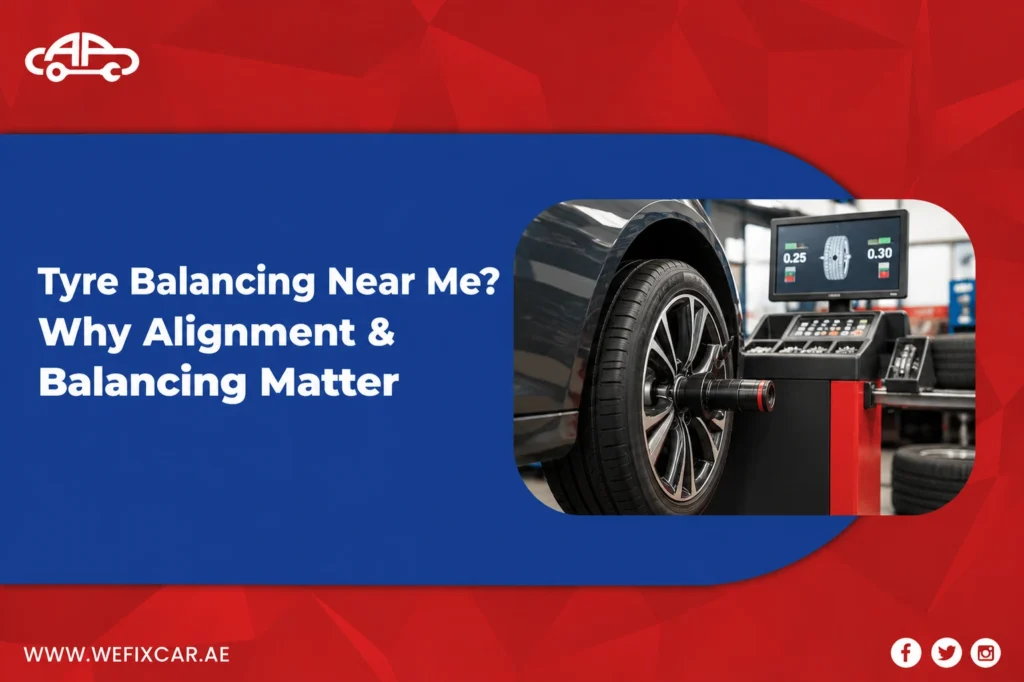
Balancing cures the problem. A mechanic mounts each wheel on a special machine then spins it. On screen you can see exactly where the extra weight sits. Small metal weights then go on the opposite side to cancel it out. Afterwards the wheel spins smoothly with no wobble. Don’t worry about those weights. They’re so tiny you’ll never notice them once fitted.
New tyres always need this treatment. So do repaired punctures. Whenever a tyre leaves its wheel the weight spread can change.
How Wheel Alignment Is Different
Alignment has nothing to do with weight. It’s all about angles. Your wheels must point the right way while sitting at the right tilt. Car makers set exact numbers for this. Once those numbers drift your car stops driving straight.
Think about a shopping trolley with one stubborn wheel. You keep fighting it just to go in a straight line. Driving with poor alignment feels much the same. It pulls to one side. The steering wheel sits crooked. Just one edge of a tyre wears down far faster than the rest.
Big bumps can knock the settings out of place. Clipping a kerb hard does the same. Even normal daily driving nudges them slowly over time. Luckily a quick check puts everything back where it belongs.
Warning Signs You Should Not Ignore
Cars rarely fail without a hint. Unbalanced wheels usually show up like this.
- Shaking steering wheel at higher speeds
- Buzzing seat or floor during a drive
- Vibration that fades once you slow down
- Tyres wearing in odd patches
Poor alignment feels different.
- Car drifting left or right on a flat road
- Crooked steering wheel on a straight road
- Inner or outer tyre edges looking more worn
- Squealing tyres on gentle turns
Spot any of these? Time to search tyre balancing near me. Waiting only makes the damage bigger. Plenty of cars show both sets of signs at once.
Why Doing Both Jobs Pays Off
Balancing alone won’t fix a crooked car. Alignment alone won’t stop a shaking wheel. It’s like polishing your shoes before a muddy walk. The shine vanishes in minutes. Each job protects the other.
Here’s what you gain when both are right.
- Longer tyre life. Even wear lets every tyre reach its full lifespan. Replacing a full set costs far more than a short service.
- Safer driving. Wheels that grip evenly steer exactly where you point them. Braking stays steady when you need it most.
- Better fuel use. Wheels pointing the right way roll with less effort. That helps your tank last longer.
- Calmer rides. Less shaking means less tiredness on long trips.
- Smaller repair bills. Constant vibration wears out the parts that hold your wheels in place. Fixing those costs far more than a balancing job.
How Often Should You Book a Visit?
No single rule fits every car. Still a few easy guidelines help.
Get your wheels balanced whenever new tyres go on. Do it again after any puncture repair. Otherwise aim for once every ten thousand kilometres.
Expect an alignment check about once a year. Book it sooner after a hard bump or kerb hit. Any steering repair calls for one too.
Feel something odd? Skip the calendar. Early action keeps small problems small.
Why UAE Roads Are Tough on Tyres
Driving here brings a few extra challenges. Highways allow fast speeds so even slightly uneven weight shows up quickly. Summer heat raises tyre pressure while also wearing rubber faster. Speed bumps outside malls or homes jolt the wheels all day long. Parking kerbs get scraped without anyone noticing. Weekend drives from Dubai to Abu Dhabi add even more strain. Together these things punish your wheels more than you might think.
What Happens During a Visit?
Some drivers who search tyre balancing near me expect a long messy job. The reality is far simpler.
First the mechanic checks your tyre pressure then looks over every tyre for damage. Next each wheel comes off the car for balancing. The machine spins it while a screen points out where the weights belong. Fresh weights get fixed in place. Finally one last spin proves the wheel runs true.
Wheel alignment works differently. Here the car sits on a flat platform while sensors read each wheel angle. Readings on the screen get compared with the maker’s numbers. Then the mechanic adjusts the steering parts until everything lines up.
Most visits wrap up in about an hour. You can wait nearby or run a quick errand. Good workshops will show you the readings from before and after.
Picking the Right Spot for Tyre Balancing Near Me
Not every result for tyre balancing near me deserves your time. Quick checks help you spot a good one. Look for these signs.
- Modern machines that give clear readings
- Mechanics who explain problems in plain words
- Honest prices shared before work begins
- Printed results that prove the fix worked
- Real reviews from local drivers
- Willingness to recheck if the shaking returns
Location counts too. Return visits feel painless when the workshop sits close to home or work. Some teams even come to you. That saves a trip through rush hour traffic.
Don’t be shy about asking questions either. Ask how long the job will take. Find out what happens if the shaking comes back. Confident teams answer without fuss.
Common Mistakes That Cost Drivers Money
Many drivers assume new tyres arrive perfectly balanced. They don’t. Balancing only makes sense once a tyre sits on its wheel.
Others figure a smooth ride means no problem. Small issues often hide for months. By the time you feel them the wear has already started.
Plenty more mix up balancing with alignment. Those are two separate fixes. Booking them together is easy since most workshops handle both.
Why Waiting Costs You More
Ignoring the shake feels harmless at first. Soon the tyres start wearing in strange patches. Comfort drops. Fuel costs creep up. Then a simple balancing job turns into a pricey repair. Worse still a car that pulls can react badly during sudden braking. Small fixes protect big things.
Simple Habits That Protect Your Tyres
Little habits go a long way between visits. Check your tyre pressure once a month because heat changes it quickly. Slow down for speed bumps. Park a little further from kerbs. Glance at each tyre every so often for uneven wear. Move your tyres from front to back on schedule.
None of this takes long. Five minutes now can save a big bill later.
Final Thoughts
Good tyres only work well when they spin evenly. They also need to point the right way. That’s the whole story behind both jobs. One stops the shake. The other stops the drift.
Next time your steering wheel starts to shudder skip the guesswork. Search tyre balancing near me then pick a workshop you trust. Better yet book a visit through this page so a skilled team can sort out your wheels. Clear pricing makes the whole thing painless. Tyres will last longer. Drives will feel smoother. Your wallet will thank you too.
FAQs
1. What does tyre balancing mean?
Tyre balancing spreads weight evenly around each wheel. A machine finds the heavy spots. Small weights then cancel them out. The result is a smooth spin with no shaking.
2. How is wheel alignment different from balancing?
Balancing deals with the weight inside a wheel. Alignment deals with the angle each wheel sits at. One stops the shaking. The other fixes pulling to one side along with uneven wear.
3. How often should I get my tyres balanced?
Aim for once every ten thousand kilometres. Do it whenever new tyres go on too. Book a visit after any puncture repair or as soon as you feel a shake.
4. Can I get both jobs done in one visit?
Yes. Most workshops handle both in a single trip. Doing them together saves time. It also gives the best results whenever fresh tyres go on.
5. Is it safe to drive with unbalanced wheels?
Short trips are usually fine. Driving like that for months is a bad idea. Constant shaking wears out tyres plus steering parts faster. Getting it checked early costs far less than fixing the damage later.