

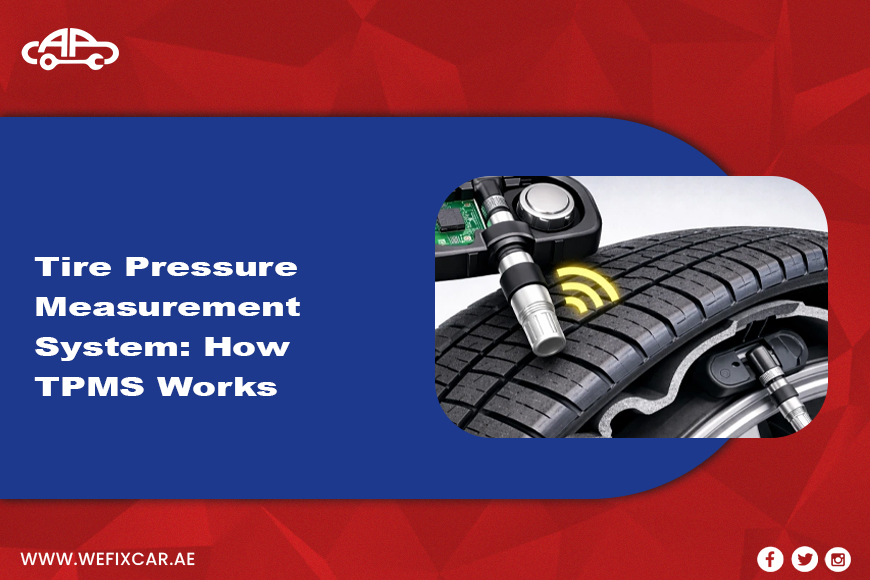
Maintaining the tire pressure is essential for your vehicle’s safety and overall performance. If your tires are not properly inflated, it can affect fuel efficiency, vehicle handling, braking distance, and tire lifespan. Modern vehicles are equipped with a tyre pressure monitoring system, a smart safety feature that continuously checks tire pressure and alerts drivers when it falls below the recommended level. In a place like Dubai, where high temperatures can cause tire pressure to fluctuate, this technology is especially important for daily commuters and long-distance travelers. It helps improve road safety, enhances driving performance, and reduces the risk of unexpected tire failures.
What Is a Tire Pressure Monitoring System?
A tire pressure monitoring system is an electronic safety feature that checks the air pressure in your vehicles tires all the time. When it finds out that one or more of your tires has pressure it turns on a warning light on your dashboard.
The main goal of a tire pressure monitoring system is to help you keep your tires at the pressure reduce the chance of a tire blowing out make your vehicle handle better and help you get better gas mileage.
In a place like Dubai, where people often drive on the highway for a long time it is especially important to keep your tires at the right pressure. When it gets hot the pressure in your tires can change a lot during the day.
Why Tire Pressure Matters
A lot of people do not think about their tire pressure until they get a tire.. Having the wrong tire pressure can cause a lot of problems.
If your tire pressure is too low it makes your engine work harder and use gas. It also makes your tires wear out faster. Can make your vehicle harder to steer.
If your tire pressure is too high it can make your tires slip on the road and make it harder to stop.
Having the right tire pressure has a lot of advantages including:
* gas mileage
* Better stopping power
* A comfortable ride
* Tires that last longer
* Less chance of a tire blowing out
* Safer driving
How Does a Tire Pressure Monitoring System Work?
The tire pressure monitoring system always checks the pressure in your tires. Sends that information to your vehicles computer.
When the pressure in one of your tires gets too low the warning light on your dashboard comes on telling you that you need to do something away.
There are two types of tire pressure monitoring system technology.
Direct Tire Pressure Monitoring System
A direct tire pressure monitoring system uses sensors inside each wheel to measure the pressure in your tires. Sometimes these sensors also measure the temperature of your tires.
Each sensor sends the information to your vehicles control module in time.
When the pressure gets too low the warning light on your dashboard comes on.
The good things about this system are:
* It is very accurate
* It checks the pressure all the time
* It can show you the pressure in each tire on some vehicles
* It warns you away if the pressure changes
The only bad thing is that if a sensor battery runs out or a sensor gets damaged it can be expensive to replace.
Indirect Tire Pressure Monitoring System
An indirect tire pressure monitoring system does not use sensors inside your tires.
Instead it uses sensors that measure how fast your wheels are turning, which are part of your vehicles -lock braking system.
When one of your tires loses pressure it starts to spin than the others. The system detects this. Warns you.
The good things about this system are:
* It is cheaper to maintain
* It does not need sensors on your wheels
* It is less expensive to fix
This system is not as accurate as a direct system and sometimes needs to be reset after you rotate your tires or replace them.
Read More: Need Tire Replacement in Dubai? Fast Service Nearby
Parts of a Tire Pressure Monitoring System
A tire pressure monitoring system has several important parts.
Sensors
These are installed inside each wheel. Measure the air pressure all the time.
Electronic Control Unit
This gets the information from the sensors. Analyzes it.
Dashboard Warning Light
If the pressure in one of your tires gets too low this light comes on.
Receiver Antenna
This gets the signals that the sensors send.
All these parts work together to make a system that helps prevent accidents related to tires.
Benefits of a Tire Pressure Monitoring System for Drivers in Dubai
Driving in Dubai can be tough because of the temperatures, long highways and long trips between cities.
A tire pressure monitoring system has a lot of benefits.
It makes your vehicle safer by reducing the chance of a tire blowing out during the hot summer.
It helps you get gas mileage because underinflated tires use more gas.
It makes your tires last longer because proper inflation helps them wear evenly.
It makes your vehicle handle better because proper tire pressure improves steering and stopping.
It reduces the cost of maintenance by warning you about pressure loss before it causes damage to your tires or suspension.
What the Tire Pressure Monitoring System Warning Light Means
The tire pressure monitoring system warning light usually looks like a horseshoe-shaped tire with an exclamation mark.
When you see this light:
* Check the pressure in all your tires away.
* Inflate your tires to the recommended pressure.
* Look for punctures or leaks.
* Reset the system if you need to.
If the light flashes before it stays on it might mean that there is a problem with the system, not low tire pressure.
In this case you should have a check it.
Common Reasons the Tire Pressure Monitoring System Warning Comes On
things can make the tire pressure monitoring system warning come on.
Temperature Changes
When it gets hot the air in your tires. When it gets cool it contracts. This can make the warning light come on in a place like Dubai where the temperature can change a lot.
Tire Puncture
Even a small leak can make the pressure in your tire go down slowly.
Damaged Sensor
If a sensor battery runs out or the sensor gets damaged it can give you readings.
Incorrect Tire Inflation
If you inflate your tires much or not enough it can make the warning light come on.
Tire Replacement
After you change your tires or rotate them some systems need to be reset.
How to Take Care of Your Tire Pressure Monitoring System
Taking care of your tire pressure monitoring system is pretty easy.
Check the pressure in your tires manually at once a month even if the warning light is not on.
Look for nails, cracks or uneven wear on your tires.
Replace damaged sensors away.
After you put on tires make sure the system is reset correctly.
Never ignore the tire pressure monitoring system warning light even if your vehicle seems to be driving
Tire Pressure Monitoring System and Dubais Climate
Dubai often gets really hot with temperatures over 40°C in the summer.
The heat can make the air pressure in your tires go up while you are driving.
When it cools down at night the pressure can go down enough to make the warning light come on the next morning.
It is especially important to check your tires if you drive on highways like Sheikh Zayed Road or take long trips through the desert.
Keeping your tires at the pressure not only makes your vehicle safer but also more comfortable and fuel-efficient in hot weather.
Can You Drive with the Tire Pressure Monitoring System Warning On?
Yes,. Only if the warning is because your tire pressure is a little low.
You should stop soon as you can check your tires and inflate them to the recommended pressure.
If the warning comes on suddenly while you are driving especially if your vehicle is handling strangely or vibrating you should pull over away.
Driving with underinflated tires can make them blow out and cause an accident.
Tire Pressure Monitoring System vs Manual Tire Pressure Checks
Although a tire pressure monitoring system checks your tire pressure all the time it should not replace checks.
Manual checks are still important because:
* The tire pressure monitoring system usually only warns you after the pressure has gone down a lot.
* Tire gauges can give you a precise reading.
* Manual checks can help you find wear, cuts or objects stuck in your tires.
Using a tire pressure monitoring system and doing checks regularly can give you the highest level of safety.
Future of Tire Pressure Monitoring Systems
Car technology is always getting better.
Future tire pressure monitoring systems will probably include things like maintenance, connection to the cloud integration with your smartphone and artificial intelligence that can find patterns in tire wear before they cause problems.
Some high-end vehicles already let you check your tire pressure remotely using an app.
As vehicles become more connected tire pressure monitoring systems will play a bigger role in keeping your vehicle safe and well-maintained.
Conclusion
A tire pressure monitoring system is more than a warning light on your dashboard. It is a vital safety technology that protects you, your passengers and your vehicle. By checking your tire pressure it helps you get better gas mileage makes your tires last longer improves handling and reduces the chance of a tire blowing out.
For people who drive in Dubai, where it’s hot and they often drive on the highway keeping their tires at the right pressure is especially important. While a tire pressure monitoring system gives you warnings in real time combining it with regular manual checks can ensure you have the maximum level of safety and vehicle performance. Taking care of your tires now can prevent repairs and dangerous situations on the road later.
Frequently Asked Questions
1. What is a tire pressure monitoring system?
A tire pressure monitoring system is an electronic safety feature that checks your tire pressure and warns you when one or more of your tires is underinflated.
2. Is a tire pressure monitoring system required in vehicles?
A lot of vehicles come with a tire pressure monitoring system as a standard safety feature and it is required in some markets for new passenger vehicles.
3. Can a tire pressure monitoring system detect a tire puncture?
Yes. If a puncture makes your tire pressure go down the system will warn you.
4. How often should I check my tire pressure if I have a tire pressure monitoring system?
With a tire pressure monitoring system you should check your tire pressure manually at least once a month and before long trips.
5. Does hot weather affect tire pressure monitoring system readings?
Yes. High temperatures can make your tire pressure go up and cooler temperatures can make it go down which can make the warning light come on.
6. What is the difference between a tire pressure monitoring system and an indirect tire pressure monitoring system?
A direct tire pressure monitoring system uses sensors inside each tire to measure the pressure while an indirect system estimates pressure changes using wheel speed sensors connected to the anti-lock braking system.
7. Can I drive with the tire pressure monitoring system warning light on?
You can drive for a time if the pressure loss is minor but you should check and inflate your tires as soon as possible. If the warning is accompanied by handling or vibration you should stop right away.
8. How do tire pressure monitoring system sensors last?
Most tire pressure monitoring system sensor batteries, between 5 and 10 years depending on how much you drive and the conditions you drive in.