

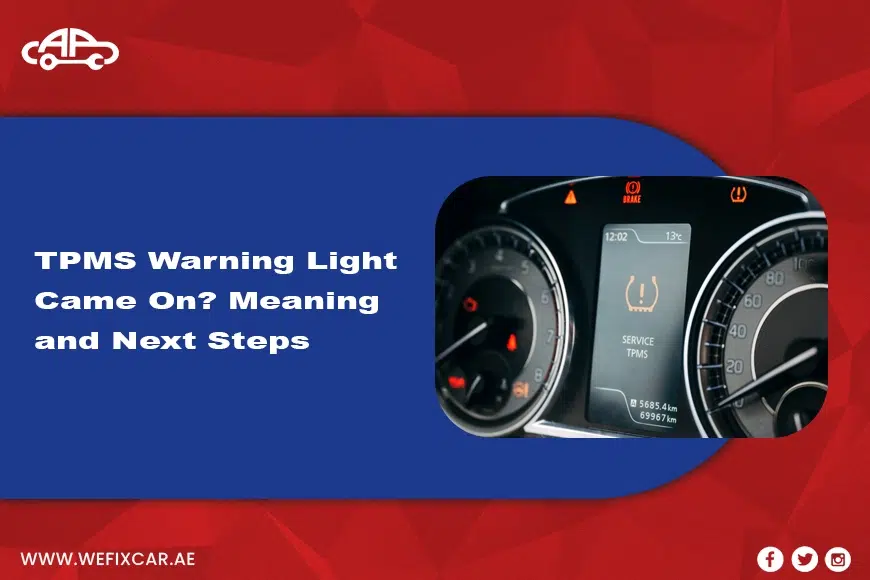
If your TPMS warning light has appeared on the dashboard, your car is telling you that something needs attention with the tyres. The tyre pressure monitoring system is designed to monitor air pressure and alert drivers when one or more tyres fall below the recommended level. In Dubai, where high temperatures, long drives, busy roads, and frequent motorway travel can affect tyre pressure, understanding this warning can help you respond safely and avoid unnecessary tyre damage.
What Does the TPMS Warning Light Mean?
The TPMS warning light is usually shown as a symbol resembling a tyre with an exclamation mark inside it. When this light comes on and stays illuminated, it generally means that the pressure in one or more tyres is lower than the vehicle’s recommended level.
The system does not replace regular tyre checks. Instead, it provides an early warning when pressure changes. A tyre can lose air gradually because of a small puncture, valve problem, temperature change, or natural air loss.
If the warning appears while driving, do not simply ignore it. Find a safe location and inspect your tyres as soon as possible.
Why Does Tyre Pressure Drop in Dubai?
Dubai’s climate can have a noticeable effect on tyre pressure. Air pressure changes with temperature, so the reading you see can vary between a cool morning and a very hot afternoon.
However, hot weather itself does not usually mean you should release air from the tyres. Tyre pressures should be checked according to the manufacturer’s recommended cold pressure, normally found on a label inside the driver’s door area or in the owner’s manual.
Other common causes include:
- A slow puncture
- A damaged tyre valve
- A leaking valve stem
- A loose or damaged wheel
- Normal air loss over time
- Incorrect tyre pressure after servicing
- Tyre damage caused by potholes or road debris
- Changes in temperature
Dubai’s roads and daily traffic conditions can expose tyres to considerable heat, friction, and road debris, making regular inspection particularly important.
Can You Drive With the TPMS Light On?
It depends on the condition of the tyres.
If the light has appeared but the tyres look normal, drive carefully to a safe location where you can check their pressure. Avoid high speeds until you know why the warning appeared.
If a tyre looks visibly flat, severely underinflated, damaged, or unstable, you should not continue driving on it. Driving on an underinflated tyre can create excessive heat and increase the risk of tyre damage or failure.
The safest approach is to check the pressure before continuing your journey.
What Should You Do When the TPMS Light Comes On?
The first step is to avoid panic. A TPMS warning does not automatically mean that you have a major tyre problem.
Follow these steps:
1. Slow Down and Find a Safe Place
If the warning comes on while driving, reduce your speed and find a safe place to stop. Avoid stopping in a dangerous location or on the side of a busy road unless necessary.
2. Inspect All Four Tyres
Look at each tyre carefully. Check whether any tyre appears noticeably lower than the others.
Do not rely only on appearance. A tyre can be underinflated without looking obviously flat.
3. Check the Pressure
Use a reliable tyre pressure gauge or visit a nearby tyre service facility.
Check all tyres rather than only the one that looks low. Depending on the vehicle, the spare tyre may also be equipped with a pressure sensor.
4. Compare the Readings With the Recommended Pressure
The correct pressure is determined by the vehicle manufacturer, not the maximum pressure printed on the tyre sidewall.
Look for the manufacturer’s tyre-pressure label, usually located on the driver’s door frame or another specified area.
5. Inflate the Tyre if Necessary
If the pressure is low but the tyre appears undamaged, inflate it to the manufacturer’s recommended cold pressure.
Do not deliberately overinflate the tyre because you expect Dubai’s heat to increase the pressure later.
6. Check Whether the Warning Disappears
Some vehicles automatically reset the warning after the tyre pressure has been corrected and the car has been driven for a short distance.
Other vehicles require a manual TPMS reset through the dashboard or vehicle settings.
Always follow the instructions in your owner’s manual.
Read More: How Tyre Pressure Monitoring Works in Dubai’s Climate
What If the TPMS Light Keeps Coming Back?
If you have corrected the tyre pressure but the warning returns repeatedly, there may be an underlying problem.
A slow puncture is one of the most common possibilities. A small nail, screw, damaged valve, or bead leak can allow air to escape gradually. You may inflate the tyre in the morning and discover that the pressure has dropped again later.
In this situation, simply adding air repeatedly is not a proper solution. The tyre should be inspected to identify the source of the leak.
A technician can inspect the tread, sidewall, valve, wheel and bead area to determine what is causing the pressure loss.
What Does a Flashing TPMS Light Mean?
A flashing TPMS light can mean something different from a continuously illuminated warning.
In many vehicles, a flashing warning followed by a steady light can indicate a problem with the TPMS itself rather than simply low tyre pressure.
Possible causes include:
- A faulty pressure sensor
- A damaged sensor
- A sensor battery that has reached the end of its service life
- Communication problems between the sensor and vehicle
- Incorrect sensor installation
- A system fault after tyre or wheel replacement
The exact warning pattern differs between vehicle manufacturers. If the light continues flashing, check the owner’s manual or have the system professionally diagnosed.
Can a Tyre Change Trigger a TPMS Warning?
Yes. Tyre or wheel work can sometimes result in a TPMS warning.
Modern vehicles may use sensors mounted inside each wheel. During tyre replacement, these components need to be handled carefully. If a sensor is damaged during installation, the vehicle may no longer receive accurate pressure information.
A warning can also appear when wheels are changed, sensors are replaced, or the vehicle requires a relearning procedure.
This is why it is useful to tell the technician that your vehicle has a TPMS before tyre work begins.
Why Correct Tyre Pressure Matters
Maintaining the correct tyre pressure is about more than turning off a dashboard warning.
Underinflated tyres can create additional rolling resistance, which may affect fuel consumption. They can also generate more heat and wear unevenly.
Overinflation has its own disadvantages. It can reduce the tyre’s contact area with the road and may affect ride comfort and handling.
Correct pressure helps the tyre perform as intended and supports safer handling, braking, and tyre wear.
How Often Should You Check Tyre Pressure in Dubai?
Even if your vehicle has TPMS, manually checking tyre pressure regularly is a good habit.
A practical approach is to check the pressure at least once a month and before longer journeys. You should also check it after noticing unusual handling, receiving a TPMS warning, or driving over a significant road hazard.
For accurate readings, pressure should generally be checked when the tyres are cold. Driving heats the tyres and can temporarily increase the pressure reading.
If you have recently driven for a long distance, allow the tyres to cool before using the manufacturer’s cold-pressure specification as your reference.
Does TPMS Replace a Tyre Inspection?
No.
TPMS primarily monitors tyre pressure. It does not necessarily tell you about every tyre problem.
A tyre can have:
- Sidewall damage
- Cuts
- Bulges
- Uneven tread wear
- Excessive tread wear
- A damaged valve
- Internal damage
A TPMS system may not immediately warn you about these issues if the pressure remains within its monitored range.
Therefore, regular visual inspections remain important.
When Should You Seek Professional Tyre Service?
Professional inspection is recommended if:
- The TPMS warning keeps returning
- A tyre repeatedly loses pressure
- You find a nail or screw in the tyre
- The tyre has a sidewall bulge or cut
- The vehicle pulls to one side
- You feel unusual vibration
- The steering feels different
- The TPMS warning flashes
- A tyre becomes severely underinflated
- You recently changed tyres and the TPMS is not working correctly
A technician can check the tyre itself as well as the sensor and wheel assembly.
Driving Safely After a TPMS Warning
A TPMS warning should be treated as useful information rather than something to ignore.
If you are travelling around Dubai and the light appears, reduce your speed, avoid sudden braking or sharp steering, and find a suitable location to inspect the tyres.
If you discover a seriously damaged or flat tyre, roadside assistance or professional tyre service may be safer than attempting to drive to a workshop.
For drivers who regularly travel between Dubai neighbourhoods, business districts, highways, and nearby emirates, keeping tyres correctly inflated is especially important because long journeys can place additional demands on tyres.
Final Thoughts
A TPMS warning light does not always indicate a serious problem, but it should never be ignored. The warning may simply mean that one tyre needs air, but it can also indicate a puncture, leaking valve, damaged sensor, or TPMS fault.
The best response is straightforward: stop somewhere safe, inspect the tyres, check their pressure against the manufacturer’s recommendation, and arrange professional inspection if the pressure continues to drop or the warning does not clear.
For Dubai drivers, regular tyre-pressure checks are particularly useful because high temperatures and frequent driving can make tyre maintenance an important part of everyday vehicle care.
FAQs
What does the TPMS warning light mean?
It usually means that one or more tyres have pressure below the vehicle manufacturer’s recommended level. A flashing light may indicate a TPMS system fault instead.
Can I drive with the TPMS light on?
If the tyres appear normal, you can generally drive carefully to a safe location to check their pressure. If a tyre is flat, severely underinflated, or visibly damaged, avoid driving on it.
Why does my TPMS light come back after adding air?
A recurring warning can indicate a slow puncture, valve leak, tyre damage, incorrect pressure, or a faulty sensor. The tyre should be inspected instead of repeatedly adding air.
Does Dubai’s hot weather cause the TPMS light to come on?
Temperature changes can affect tyre-pressure readings. However, you should always use the vehicle manufacturer’s recommended cold tyre pressure rather than adjusting pressure based only on outdoor temperature.
How do I reset the TPMS warning light?
Some vehicles reset automatically after the correct pressure is restored and the vehicle is driven. Others require a manual reset or sensor relearning procedure. Check your owner’s manual for the correct procedure.
How often should I check my tyre pressure?
Checking once a month and before long journeys is a good routine. Check the pressure when the tyres are cold for the most useful comparison with the manufacturer’s recommended specification.
Can a tyre have a problem even when TPMS shows normal pressure?
Yes. TPMS primarily monitors pressure. It may not detect cuts, bulges, tread damage, uneven wear, or other physical tyre problems, so visual inspections are still important.