

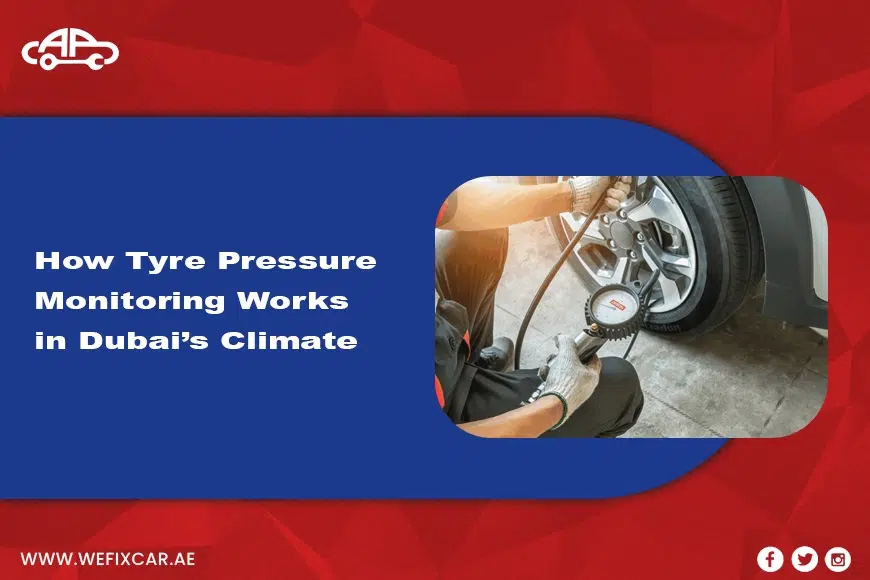
Driving in Dubai means dealing with heat, long highways, heavy traffic and frequent temperature changes between outdoor roads and air-conditioned environments. These conditions can have an impact on tyre performance and safety. That is why understanding how a tyre pressure monitoring system works can help drivers maintain control and avoid unexpected tyre problems. A TPMS continuously monitors tyre pressure and alerts the driver when pressure drops below a recommended level. This makes it an important safety feature for vehicles operating in Dubai’s demanding climate.
What Is a Tyre Pressure Monitoring System?
A tyre pressure monitoring system, commonly called TPMS, is an electronic safety system designed to monitor the air pressure inside a vehicle’s tyres. Depending on the vehicle, the system uses sensors installed inside the tyres or an indirect method that uses wheel-speed information from the anti-lock braking system (ABS).
The main purpose of TPMS is simple: to notify the driver when one or more tyres have low or abnormal pressure. Maintaining tyre pressure is important because underinflated tyres can affect braking, handling, fuel efficiency and tyre lifespan.
Modern vehicles sold in Dubai and other parts of the UAE commonly feature TPMS as part of their safety equipment.
Why Tyre Pressure Matters in Dubai
Dubai’s climate creates challenges for vehicle tyres. During summer, road and air temperatures can become extremely high. When tyres are exposed to heat, the air inside them expands, causing tyre pressure to increase temporarily.
This does not mean drivers should release air from tyres. Tyre pressure should normally be checked when the tyres are cold and adjusted according to the manufacturer’s recommended pressure.
Low tyre pressure can also occur naturally over time. Small amounts of air can escape through the tyre and valve over time, while punctures or damaged components can cause pressure to fall more quickly.
For Dubai drivers, regularly checking tyre pressure is therefore a part of vehicle maintenance.
How Does TPMS Work?
There are two types of tyre pressure monitoring technology: direct TPMS and indirect TPMS.
Direct TPMS
Direct TPMS uses pressure sensors installed inside each tyre. These sensors measure the air pressure and in many systems, the tyre temperature as well.
The sensor sends information to the vehicle’s onboard computer. If the pressure falls below the manufacturer’s threshold, the system activates a warning light on the dashboard.
Direct systems can provide accurate pressure information and may show individual tyre pressures on the vehicle’s display.
Read More: Tyre Puncture Repair Guide: Common Causes, Fixes and Safety Tips
Indirect TPMS
Indirect TPMS does not directly measure air pressure. Instead, it uses wheel-speed sensors that’re already part of the vehicle’s ABS or electronic stability control system.
When a tyre loses pressure, its rolling circumference changes slightly. This can cause it to rotate at a different speed from the other tyres. The vehicle’s computer can detect this difference. Estimate that a tyre may be underinflated.
Indirect systems can be useful, but they may not provide the same level of direct pressure information as sensor-based systems.
How Dubai Heat Affects Tyre Pressure
One of the concerns for Dubai drivers is extreme heat. Tyre pressure changes as temperature changes because the air inside the tyre expands when heated.
For example, after driving on a road for an extended period, the pressure reading may be higher than it was before the journey. This is normal. However, starting a journey with cold tyre pressure can still create problems.
High temperatures combined with underinflated tyres can increase tyre flexing and heat generation.
This may contribute to accelerated tread wear and in some cases, tyre damage.
A TPMS can provide a warning when pressure falls significantly but drivers should not depend on the system as a replacement for manual tyre inspections.
Can TPMS Prevent Tyre Problems?
A tyre pressure monitoring system can help reduce the risk of tyre-related problems by warning drivers about pressure loss. However, it cannot physically repair a puncture, valve, worn tread or defective tyre.
For example, if a tyre develops a puncture, the TPMS may alert the driver as pressure gradually decreases. This gives the driver an opportunity to inspect the tyre and have it repaired or replaced before the situation becomes more serious.
The system is therefore best viewed as a safety feature rather than a complete tyre maintenance solution.
Benefits of TPMS for Dubai Drivers
There are reasons why TPMS is particularly useful for motorists in Dubai.
Improved Driving Safety
Correct tyre pressure contributes to vehicle handling and braking performance. A warning from the TPMS can help drivers identify pressure problems before they become dangerous.
Better Fuel Efficiency
Underinflated tyres can increase resistance, which may cause the engine to work harder. Maintaining tyre pressure can support better fuel economy.
Reduced Tyre Wear
Incorrect pressure can cause tread wear. Keeping tyres inflated helps them wear more evenly and can potentially extend their useful life.
Early Warning of Pressure Loss
A warning on the dashboard may indicate a puncture or other tyre issue. Detecting pressure loss early is especially valuable when driving on Dubai’s highways.
Greater Convenience
Instead of relying entirely on visual inspection, drivers receive an electronic warning when the system detects a significant pressure problem.
Why TPMS Warnings Should Not Be Ignored
Some drivers may see the TPMS warning light and assume they can continue driving. This can be risky.
A warning generally means that one or more tyres require attention. Continuing to drive for a distance with low pressure can increase heat buildup and tyre stress.
If the warning appears, reduce speed and safely stop at the earliest suitable location. Check the tyres. If you notice a damaged tyre, unusual vibration or rapid pressure loss, avoid continuing the journey and seek professional assistance.
Dubai’s high temperatures and long-distance roads make it particularly important to respond quickly to tyre warnings.
How Often Should You Check Tyre Pressure in Dubai?
Even if your vehicle has TPMS, checking tyre pressure is recommended. A good practice is to check tyre pressure at least once a month.
Pressure should ideally be checked when the tyres are cold, such as before driving or after the vehicle has been parked for hours.
The correct pressure can usually be found on the vehicle manufacturer’s tire-pressure label, often located inside the driver’s door area door frame or owners manual.
Do not automatically use the pressure printed on the tyre sidewall. That figure is not necessarily the operating pressure for your specific vehicle.
What Does the TPMS Warning Light Mean?
The TPMS warning light usually appears as a symbol resembling a tyre with an exclamation mark.
If the light stays illuminated, the system may have detected low tyre pressure. Drivers should check the pressure of all tyres. Inflate them to the manufacturers recommended level.
If the light flashes and then remains illuminated, it may indicate a TPMS sensor or system malfunction rather than simply low tyre pressure.
Because warning-light behavior can vary between vehicles checking the owners manual is recommended.
TPMS Maintenance in Dubai
TPMS sensors are components and can eventually require maintenance or replacement. TPMS sensors contain batteries that may lose their charge after several years.
Tyre replacement requires care because the sensor is located inside or attached to the wheel assembly in many direct TPMS systems.
When changing tyres, balancing wheels or repairing punctures, professional technicians should be aware of the TPMS sensors to avoid damaging them.
After replacing sensors or changing components the vehicle may also require TPMS relearning or calibration.
TPMS and Long Highway Trips
Dubai has highways connecting the city with other emirates and destinations. Long-distance driving places additional demands on tyres during hot weather.
Before a highway journey, drivers should check tyre pressure, inspect tread condition, look for visible damage and make sure the spare tyre or emergency equipment is ready, if applicable.
TPMS provides a layer of monitoring during the journey but basic tyre inspection remains essential.
Does TPMS Measure Tyre Temperature?
Some direct TPMS systems can monitor both tyre pressure and temperature. This information can help provide a detailed picture of tyre conditions.
However not every TPMS system displays temperature to the driver. The available information depends on the vehicle and TPMS technology.
Tyre temperature can rise during driving because of road conditions, speed, ambient temperature, tyre load and pressure. Therefore readings taken after driving may differ from measurements.
Common TPMS Mistakes Drivers Should Avoid
One mistake is assuming that a TPMS means tyres never need manual inspection. The system is designed to assist the driver not replace maintenance.
Another mistake is adjusting pressure based on a hot tyre reading without considering the manufacturers recommended pressure.
Drivers should also avoid ignoring repeated TPMS warnings. If the warning returns after inflation there could be a puncture, valve problem, sensor issue or another underlying problem.
Finally tyre pressure should be checked on all tyres than only the tyre identified by the warning system.
How to Keep Your Tyres Ready for Dubai Roads
Keeping tyres in condition requires more than monitoring air pressure. Drivers should regularly inspect tread depth, check for cracks or bulges, examine the sidewalls and look for wear.
Wheel alignment and balancing can also be important when a vehicle shows symptoms such as steering vibration or uneven tyre wear.
During Dubai’s hotter months, paying closer attention to tyre condition is especially important. High temperatures do not automatically make a maintained tyre unsafe but poor pressure, excessive wear, overloading or existing damage can increase risks.
Final Thoughts
Understanding how a tyre pressure monitoring system works can help Dubai drivers make decisions about vehicle safety and maintenance. TPMS monitors tyre pressure through sensors or indirect wheel-speed calculations and alerts drivers when it detects a significant pressure issue.
Dubai’s hot climate, busy roads and long highway journeys make tyre maintenance particularly important. While TPMS provides assistance, drivers should still manually check cold tyre pressure inspect tyre condition and respond promptly to warning lights.
Keeping tyres correctly inflated according to the vehicle manufacturers recommendations can support handling more consistent tyre wear and better fuel efficiency. For anyone driving in Dubai TPMS should be considered an important part of a broader tyre-care routine.
Frequently Asked Questions
1. Does Dubais heat increase tyre pressure?
Yes. As tyre temperature increases the air inside the tyre expands, which can temporarily increase the pressure reading. This is why pressure is normally checked when tyres are cold.
2. Can TPMS detect a puncture?
TPMS can detect the resulting loss of tyre pressure depending on the severity and speed of the pressure loss. However, it does not repair the physical cause of the puncture.
3. Should I reduce tyre pressure when it is very hot in Dubai?
No. Drivers should not release air simply because the pressure reading is higher after driving in hot conditions. Follow the vehicle manufacturers recommended cold tyre pressure.
4. How often should I check tyre pressure in Dubai?
Checking tyre pressure least once a month and before long journeys is a sensible routine. Always check when the tyres are cold for the useful comparison with the manufacturers recommended pressure.
5. Why is my TPMS light on after inflating the tyres?
Some vehicles require the TPMS to reset or relearn the tyre-pressure values after inflation. If the light remains on there may also be a puncture, sensor problem or system fault.
6. Is TPMS for highway driving in Dubai?
Yes. TPMS can provide a warning of significant pressure loss while travelling, which can be especially useful during long highway journeys.
7. Does every car in Dubai have TPMS?
No. TPMS availability depends on the vehicles model, year, market specifications and manufacturer. Many modern vehicles include it as a safety feature.
8. Can low tyre pressure affect fuel consumption?
Yes. Underinflated tyres can increase resistance, which may cause the vehicle to use more fuel. Maintaining the recommended pressure can help support operation.
9. Does TPMS replace tyre inspections?
No. TPMS is an assistance system. Drivers should still inspect tyres for tread wear, punctures, cracks, bulges and other visible damage.
10. What should I do if the TPMS warning appears while driving?
Reduce speed, avoid maneuvers and safely stop at the earliest suitable location to inspect the tyres. Check the pressure. Seek professional assistance if you find damage or cannot identify the cause.