

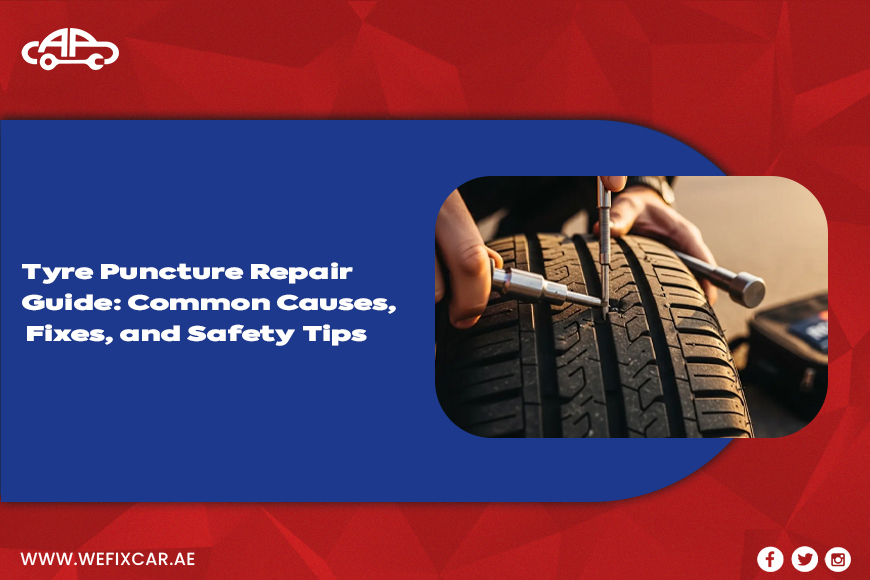
A flat tyre can happen at any time, whether you are driving to work, heading to the airport or exploring Dubai. Some things can cause a tyre to puncture, such as road debris, sharp objects, extreme heat, and worn tyres. If you get a puncture, searching for a tyre puncture service near me is often the way to get back on the road safely. Understanding why tyre punctures happen and knowing how they are repaired can help you avoid costly delays and improve your driving safety.
Why Tyre Punctures Are Common in Dubai
Dubai has good roads, but tyre punctures still happen a lot. High temperatures, long-distance driving, construction projects, and road debris can all damage tyres.
Some common reasons for punctures include:
* Sharp nails and screws on the road
* Broken glass
* Metal fragments
* Driving over potholes
* Underinflated tyres
* Overloaded vehicles
* Worn tyre tread
* Damaged valve stems
* Heat-related tyre wear
Because it gets very hot in Dubai, tyres get stressed, so you need to check them
Common Causes of Tyre Punctures
1. Nails and Screws
The common cause of tyre punctures is driving over nails or screws. You need to be careful when driving in construction areas and industrial zones.
2. Sharp Road Debris
Glass, metal pieces, and sharp stones can easily puncture tire rubber, especially if the tread is thin.
3. Potholes
Hitting a pothole at speed can damage the tyre and wheel rim, sometimes causing an air leak.
4. Worn-Out Tyres
Old tyres with tread are more likely to get punctured because the protective rubber layer is thinner.
5. Incorrect Tyre Pressure
Driving with overinflated tyres increases the risk of punctures and blowouts.
6. Valve Stem Damage
Sometimes the tyre itself is not punctured. Air escapes through a cracked or damaged valve stem.
Signs That Your Tyre Has a Puncture
You need to recognise a puncture to prevent further damage.
Some common warning signs include:
* Tyre pressure warning light
* Vehicle pulling to one side
* Nail or screw
* Hissing sound
* Air loss
* Poor handling
* Vibrations while driving
* Flat-looking tyre
If you notice any of these signs, stop driving as soon as it is safe.
Different Types of Tyre Damage
Not every damaged tyre can be fixed.
You can fix a tyre when:
* The puncture is in the centre tread.
* The hole is small.
* The tyre structure is intact.
* There are no sidewall cuts.
You need to replace the tyre when:
* The sidewall is punctured.
* There are punctures close together.
* The tyre cords are exposed.
* The tyre has blown out.
* There are tears.
Professional technicians always check the tyre before deciding whether to fix or replace it.
How Professionals Repair a Tyre Puncture
Professional repair involves more than inserting a plug.
The steps are:
1. Inspection: The technician checks the tyre inside and outside for damage.
2. Remove the Object: Any nail, screw or sharp object is carefully removed.
3. Prepare the Hole: The puncture area is prepared for repair.
4. Install a Patch or Plug: Technicians may use a plug, patch, or combination of both.
5. Inflate and Balance: The tyre is inflated to the pressure and tested for leaks.
6. Final Safety Inspection: Technicians verify tyre pressure and overall safety before returning the vehicle.
Read More: The Complete Guide to Tyre Pressure Monitoring Systems (TPMS) in 2026
Temporary Fixes You Can Use
Solutions can help you reach the nearest repair shop, but they should never replace professional repairs.
You can use:
* Tyre sealant to block punctures.
* Portable air compressor to add air for short-distance driving.
* Tyre plug kit for emergency repairs. You need to install it correctly.
Always have the tyre checked by a professional afterward.
Safety Tips After a Puncture
Your safety is an important thing.
If you get a puncture:
* Slow down gradually.
* Avoid braking.
* Turn on hazard lights.
* Pull over safely.
* Stay away from moving traffic.
* Install warning triangles if you have them.
* Call professional roadside assistance.
Never drive on a flat tyre as it can destroy the tyre and damage the wheel.
How to Prevent Tyre Punctures
While punctures cannot always be avoided, regular maintenance significantly reduces the risk.
* Check tyre pressure every week.
* Inspect tread depth. Replace tyres when they are worn out.
* Rotate tyres regularly to promote even wear.
* Avoid road debris near construction sites.
* Do not overload your vehicle, as it puts stress on tyres.
* Inspect tyres every month for cuts, cracks, nails, bulges and uneven wear.
Why Mobile Tyre Repair Is Popular in Dubai
People in Dubai like mobile tyre repair services because they save time and do not require towing.
The benefits include:
* Roadside assistance
* Home service
* Office service
* Fast response
* Professional equipment
* Emergency availability
* Flexible scheduling
Many drivers in Dubai prefer mobile repair because help comes directly to their location.
When to Replace or Repair
Sometimes it is not safe to repair a tyre.
You should replace the tyre if:
* The sidewall is damaged.
* The tread depth is below the limit.
* The tyre is old or has deteriorated due to age.
* The internal cords are damaged.
* The tyre has been repaired times before.
Safety is more important than repair costs.
Choosing the Best Tyre Repair Service in Dubai
When looking for a service provider, consider:
* Experienced technicians
* Mobile roadside assistance
* Fast response times
* Transparent pricing
* Positive customer reviews
* Modern repair equipment
* Availability across Dubai
* 24/7 emergency support
Choosing an experienced service provider ensures the repair is done safely and correctly.
Emergency Tyre Problems That Need Immediate Attention
Some tyre problems require immediate professional assistance.
Examples include:
* Blowouts
* Rapid air loss
* Sidewall tears
* Bent rims
* Tyre separation
* Multiple punctures
In these cases, do not. Contact roadside assistance immediately.
Why Professional Repairs Are Worth It
Professional repairs provide:
* Better safety
* Longer tyre life
* Leak testing
* Wheel balancing
* Manufacturer-approved repair methods
* Reduced risk of failure
Trying to fix a tyre yourself may not be safe.
Conclusion
Tyre punctures are a part of driving. Knowing what causes them and how to respond can make a big difference. Regular tyre checks, proper inflation, and careful driving can reduce the chances of breakdowns. If you experience a tyre puncture in Dubai, contacting a trusted tyre puncture service near me helps ensure your vehicle is repaired safely and efficiently. Whether you are at home at work or stranded roadside, professional tyre repair services help you return to the road with confidence and peace of mind.
Frequently Asked Questions (FAQs)
1. What is the common cause of a tyre puncture?
The common causes of tyre punctures are nails, screws, broken glass and sharp metal objects.
2. Can every tyre puncture be repaired?
No, not every puncture can be fixed. Sidewall damage, large tears and severe structural damage usually require tyre replacement.
3. Is it safe to drive with a puncture?
No, it is not recommended. Even a slow leak can become dangerous if ignored.
4. How long does a tyre puncture repair take?
Most professional repairs take between 20 and 40 minutes depending on the damage.
5. Are mobile tyre repair services available in Dubai?
Yes, many providers offer mobile tyre repair and roadside assistance throughout Dubai.
6. How often should I check tyre pressure?
You should check tyre pressure at least once a week and before long trips.
7. Can a plugged tyre be used for long-distance driving?
A repaired tyre is generally safe if the damage meets repair guidelines. Temporary DIY plugs should be inspected by a professional.
8. When should I replace a tyre?
You should replace the tyre if the sidewall is damaged, the puncture is too large, or the tyre has wear or structural damage.