

Driving in Dubai has its challenges, with hot weather, busy roads, highways, and long journeys where the condition of your tires can be vital to your safety and comfort. One of the helpful technologies designed to assist drivers in assessing the condition of their tires is the Tire Pressure Monitoring System (TPMS). Understanding how it works can help you determine pressure loss on your tires.
A tyre pressure monitoring system is an electronic safety feature that helps you monitor the pressure in your vehicle’s tyres and notify you when the pressure is too low. The system is useful in the UAE as high temperatures and driving on highways can affect the pressure in your vehicle’s tires. By understanding TPMS and ensuring the tires are well-maintained, you can drive safely and comfortably.
What Is a Tire Pressure Monitoring System?
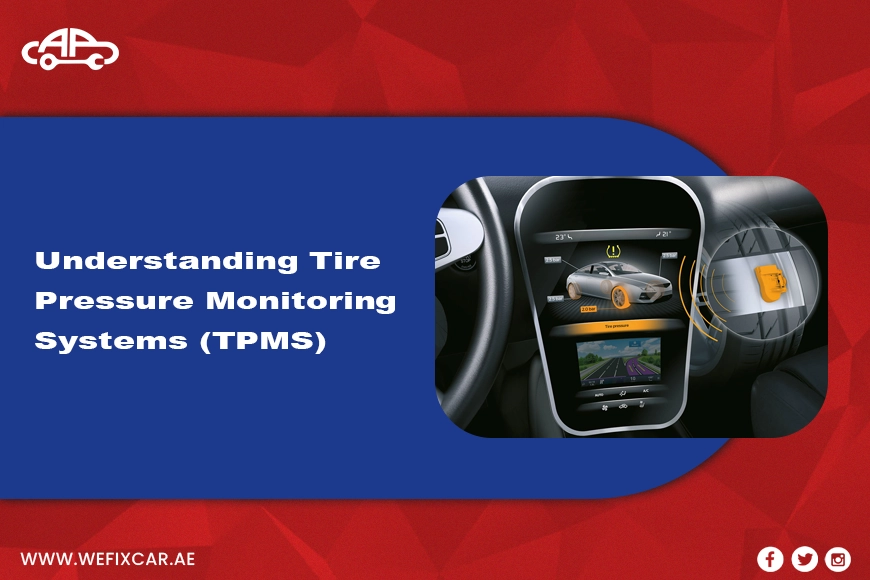
A Tire Pressure Monitoring System is a system that monitors the pressure in your vehicle’s tires while driving. The system can be direct or indirect. A direct TPMS uses pressure sensors to monitor the air pressure in the vehicle’s tires. The sensors can be installed in the wheel’s rim or the valve stem. On the other hand, an indirect TPMS uses information from the vehicle’s antilock brakes to calculate the pressure in the tires.
When the TPMS senses that the pressure in one or more tires is low, it notifies you. Usually, the warning sign is a tire-shaped icon that appears on the driver’s dashboard. The TPMS warning system is not a substitute for regular tire pressure monitoring and maintenance. Understanding TPMS can help you know when to check and maintain your car’s tires.
Why Is TPMS Important in Dubai?
Dubai’s climate is extremely hot, making it challenging to maintain the correct pressure in your vehicle’s tires. Additionally, long drives on highways can also be stressful to tires. Having the correct pressure is essential for the vehicle’s performance and safety on the road.
Tires that are not inflated according to the manufacturer’s recommended pressure can affect the vehicle’s performance, comfort, fuel efficiency, and safety. Driving on under-inflated tires can also be dangerous, particularly on hot days. As such, when driving in the UAE, it is crucial to ensure that your vehicle’s tires are not underinflated.
If your TPMS indicates that your vehicle’s tire pressure is low, it is advisable to stop and check the tires before resuming your journey. The early warning can be vital, particularly if you are driving on a highway. Understanding TPMS can also help you drive safely and comfortably, particularly in the UAE.
How Does TPMS Work?
A TPMS can be direct or indirect, as mentioned above. A direct TPMS uses onboard sensors to monitor the pressure in your vehicle’s tires. The sensors can be located in the wheel rims or the valve stems.
The sensors transmit the information to the car’s onboard computer, where it compares the pressure in the tires to the recommended or ideal pressure. If the computer senses that the pressure in one or more tires is low, it notifies you. Most advanced TPMS also displays the tire pressure in each tire on the vehicle’s information system.
An indirect TPMS, on the other hand, uses the information from the antilock brakes. The system calculates the speed of the vehicle’s wheels and senses pressure loss if one wheel spins faster than the others. Although an indirect TPMS cannot determine which tire is losing pressure, it can indicate that the vehicle is experiencing a pressure loss.
What Does the TPMS Warning Light Mean?
The TPMS warning light is usually a tire-shaped icon with an exclamation mark in the center. Whenever the warning light is on, it means that the pressure in one or more tires is low.
If the warning light flashes while you are driving, it is advisable to slow down and check your tires as soon as possible. It is dangerous to ignore the warning, particularly if you are driving on a highway. Although the TPMS warning light can indicate a punctured tire, it can also mean that your tires are losing air slowly. As such, it is crucial to always check the tires if the warning light flashes.
What Causes Low Tire Pressure?
Various factors can cause low tire pressure in your vehicle, including punctured tires, temperature changes, normal air loss, and malfunctioning valves. As such, you may need to check and inflate the tires regularly. Understanding these causes can help you determine the cause of pressure loss and respond accordingly.
Punctured or pinched tires can be a common cause of low tire pressure. The punctures can occur due to various factors, such as nails, screws, or any sharp objects.
Temperature changes can also be a significant cause of pressure loss. The pressure in your vehicle’s tires changes in response to temperature changes – the higher the temperature, the higher the pressure in the tires. As such, it is not unusual to experience low tire pressure during cold days.
Normal air loss can also be the cause of pressure loss. Tires can only contain a certain amount of air, and as such, they may require occasional re-inflation.
Malfunctioning valves can also be the cause of slow pressure loss. The valves are the primary source of air loss in a tire, and as such, it is crucial to ensure they are not faulty.
How Does Hot Weather Affect Tire Pressure?
As aforementioned, temperature changes can cause changes in tire pressure. As such, in a hot climate such as Dubai, you may experience higher tire pressure than usual. It is therefore not uncommon for many drivers to experience TPMS warnings in the UAE.
The ideal time to monitor and check tire pressure is when the tires are cold. You should, therefore, avoid checking tire pressure immediately after driving or stopping after a long drive. Always check tire pressure when tires are cold, particularly if you are driving in hot weather.
Do not reduce or release tire pressure intentionally if the TPMS warning light flashes. It is important to remember that the TPMS is calibrated to recommend tire pressure at cold tires. As such, you should not assume that the reading is accurate and that you need to release pressure when driving at hot temperatures.
Read More: How Tyre Pressure Monitoring Works in Dubai’s Climate
How to Check Tire Pressure Correctly
Although TPMS is reliable, it cannot replace manually checking the vehicle’s tires. You should, therefore, manually check the tires at least once a month. Checking tire pressure yourself can be a cost-effective way of maintaining the vehicle and ensuring it is roadworthy.
To manually check your vehicle’s tire pressure, you first need to confirm the recommended or ideal tire pressure for your vehicle. The recommended pressure can be found in the owner’s manual or in the car’s QSL, a small sticky note on the driver’s door frame, or the fuel-fill cap area.
Using a reliable tire pressure gauge, you can measure and confirm the pressure in each of the vehicle’s tires. If the vehicle has a spare tire, you should also check it, and inflate it to the recommended pressure if necessary.
You should also check if the TPMS warning light goes off or if you need to reset the system after you inflate the tires. If the warning light is on, it can mean that the TPMS needs to be calibrated or repaired.
Can TPMS Detect a Puncture?
A TPMS can detect a puncture, although it cannot determine the puncture’s size or how long the puncture has been there. If the TPMS warning light flashes, it can be an indication that one of the vehicle’s tires is punctured or has a slow puncture. As such, if the TPMS warning light flashes and you suspect a puncture, it is advisable to seek professional assistance.
If you suspect that one of the vehicle’s tires is punctured, it is advisable not to use that tire immediately. If the TPMS warning light flashes and you suspect that a puncture might be the cause of the pressure loss, you should inflate the tire to the recommended pressure and get professional assistance. A professional can examine the tire and confirm if it is punctured and whether it can still be used.
Benefits of Maintaining Correct Tire Pressure
Maintaining the correct tire pressure can provide various benefits to the vehicle, including better handling, especially at high speeds. It can also prolong the life of the tires and improve fuel economy.
The correct tire pressure can also enhance the vehicle’s safety on the road. In combination with regular tire maintenance and inspection, TPMS can help you ensure that your vehicle is ready for long drives on highways.
TPMS Maintenance and Calibration
TPMS sensors are electronic devices and can, therefore, malfunction or require maintenance after a while. After inflating the tires, the TPMS warning light may persist if the system malfunctions. You should, therefore, seek professional assistance to recalibrate the TPMS sensors and install new TPMS if necessary.
How Often Should You Check Tire Pressure?
As aforementioned, it is advisable to manually check tire pressure at least once a month. You should also check tire pressure before embarking on long-distance drives. In addition to manually checking the tire pressure, you should also look out for other signs that may indicate low tire pressure.
In the UAE, it is common to take long drives on highways and long-distance drives between the emirates for business, tourism, and personal reasons. It is, therefore, essential to routinely check tire pressure and ensure that the vehicle’s tires are roadworthy.
What Should You Do When the TPMS Light Comes On?
Whenever the TPMS warning light comes on, you should avoid ignoring it. If the warning light flashes while you are driving, it is advisable to slow down and pull over when it is safe to do so and inspect your vehicle’s tires. You should also physically check the vehicle’s tires for damages or pressure loss if you suspect that TPMS is malfunctioning.
If you have a reliable tire pressure gauge, you should use it to check and confirm the vehicle’s tire pressure. You should compare the results to the recommended tire pressure and respond accordingly. If one of the vehicle’s tires has exceptionally low pressure, you should inflate it to the recommended pressure.
You should also inspect the vehicle’s tires to confirm if the cause of the pressure loss is a puncture or any other damages. If the vehicle’s tire is damaged, it is advisable not to use it, particularly for long-distance driving.
TPMS vs Regular Tire Checks
TPMS and manual tire pressure checks should work together. Although TPMS can be a good way of ensuring that the tires are not underinflated, it cannot replace manual tire pressure checks or inspection.
TPMS warning lights can indicate that the tire pressure is low or that the TPMS is malfunctioning. As such, you should not assume that TPMS is always right, particularly if you suspect that the TPMS is faulty. It is, therefore, essential to manually check the vehicle’s tire pressure at least once a month in addition to checking tire pressure using TPMS.
Why TPMS Matters for Long-Distance Driving in the UAE
Dubai residents always drive between the emirates for personal and business reasons. Long-distance driving can be stressful, particularly on the vehicles’ tires. Before driving on a long journey, it is advisable to confirm the vehicle’s tire pressure, inspect the vehicle’s tires for damages or punctures, and ensure that the TPMS is working correctly.
Final Thoughts
A tyre pressure monitoring system is an essential part of a vehicle that helps ensure road safety. Understanding TPMS and routinely checking your vehicle’s tire pressure can be incredibly helpful, particularly in Dubai or any hot climate. Although TPMS is reliable, it is advisable not to rely on it to monitor the vehicle’s tire pressure.
For residents of the UAE, it is crucial to ensure that their vehicle’s tires are roadworthy before embarking on long-distance drives. Routine maintenance, inspection, and tire pressure checks can help them ensure that their vehicles are always roadworthy and that their trips are safe.
Frequently Asked Questions
What is a tyre pressure monitoring system?
A tyre pressure monitoring system is a vehicle safety feature that helps you monitor the pressure in your vehicle’s tyres and notify you when the pressure is too low or, in some cases, falls outside a specified range.
Why is TPMS important in Dubai?
TPMS is important in Dubai because the high temperatures, driving on highways, and long-distance driving are some of the factors that can cause pressure loss in vehicle tires.
Can I drive with the TPMS warning light on?
It is best to avoid driving with the TPMS warning light on. If the TPMS light flashes while you are driving, slow down and check your vehicle’s tire pressure as soon as possible.
Does TPMS replace checking tire pressure manually?
No. TPMS is an added safety feature but should not replace regular manual tire checks and inspection.
How often should tire pressure be checked?
A good rule of thumb is to check tire pressure at least once a month and before embarking on long-distance journeys. Check the owner’s manual for recommended timing and practices.
Does hot weather increase tire pressure?
Yes. Hot weather can cause the pressure in your vehicle’s tires to increase, particularly if you drive on a highway.
Can TPMS detect a puncture?
TPMS can detect a puncture, although it cannot determine the size of the puncture or how long it has been present. A manual inspection is required to confirm a puncture and inspect the extent of the damage.